
H200 GPU Server
Expanded memory and bandwidth for the largest models and most demanding workloads.
We help you choose, configure, and deliver the right system. No obligation.
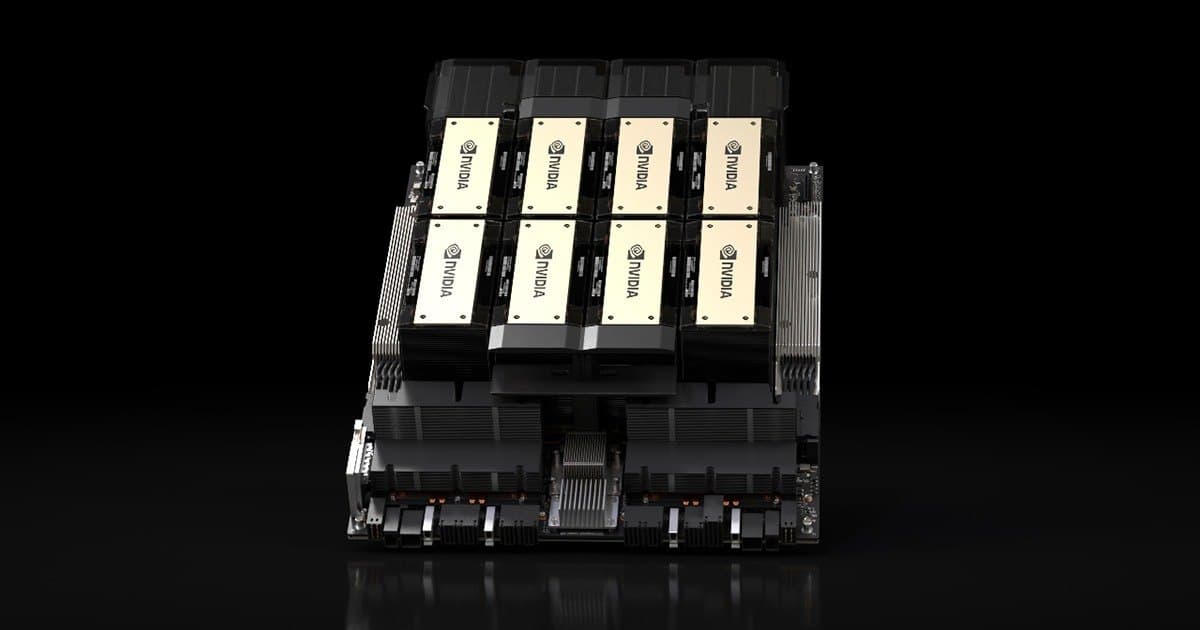

Configuration at a Glance
Tailored per engagement. Full technical overview below.
Configuration Options
Core specifications for this system. Every component is configurable to your workload, so request a quote for a tailored build.
NVIDIA H200 SXM5 (141GB HBM3e)
Dual AMD EPYC or Intel Xeon
Up to 2TB ECC
Overview
The H200 GPU Server builds on the H100 architecture with substantially more memory and bandwidth, the difference that lets the largest models run on fewer nodes. Nexus Compute sources H200 systems for organizations whose model sizes or throughput requirements have outgrown the H100. The number that matters is 141GB against the H100's 80GB. That difference decides whether a large model fits on four GPUs instead of eight, or within one node instead of two, and removing a node boundary removes the fabric traffic, the parallelism complexity, and the failure domain that come with it. For inference the same expanded memory holds a far larger KV cache, so concurrency and context length can rise before you run out of room. The trade is that H200 nodes draw on the same allocation pool as other current-generation parts and are typically both scarcer and more expensive per GPU, so the case for them is strongest where the extra memory genuinely changes your topology rather than simply providing headroom.
Who This Solution Is For
Business Benefits
Run larger models per node
Expanded memory lets the biggest models run without sharding across as many machines, simplifying operations.
Higher inference throughput
Greater memory bandwidth increases tokens-per-second on memory-bound inference workloads.
Fewer nodes, less fabric
Consolidating large models onto fewer nodes can reduce networking and operational complexity.
Sourcing guidance
We help you decide where the H200 premium is justified versus the H100.
Typical Business Use Cases
Very large language model inference and serving
Training workloads that benefit from expanded GPU memory
Consolidating large models onto fewer nodes
Memory-bandwidth-bound HPC and AI workloads
Long-context inference where KV cache, not weights, is the constraint
Fitting models that will not sit within an 80GB-class GPU
Industry Applications
Technical Overview
Built around NVIDIA H200 SXM5 GPUs with expanded HBM3e memory and bandwidth, full NVSwitch interconnect, dual server CPUs, multi-terabyte ECC memory, and InfiniBand networking for cluster scaling. Where an H200 node earns its place is in the arithmetic of fitting: half-precision weights take roughly 2GB per billion parameters before KV cache, so the step from 80GB to 141GB per GPU moves the boundary at which tensor parallelism, pipeline parallelism, or offload become necessary. Host sizing is unchanged from any dense node (cores and system memory scaled to the accelerators), but the input pipeline has to work harder, because a faster GPU is easier to starve; local NVMe capable of sustained multi-gigabyte-per-second reads sits in front of the bulk tier, which is covered under /products/storage. NVSwitch carries all-to-all traffic inside the node; between nodes it is InfiniBand or RoCE, and that topology should be specified for the cluster's eventual size, not its first phase: see /products/networking.
| GPU | NVIDIA H200 SXM5 (141GB HBM3e) |
| GPU Capacity | Up to 8 GPUs per node |
| GPU Interconnect | NVSwitch all-to-all |
| CPU | Dual AMD EPYC or Intel Xeon |
| System Memory | Up to 2TB ECC |
| Networking | InfiniBand NDR / 400GbE |
| Power | Redundant high-capacity PSUs |
| Form Factor | 8U rackmount |
| Memory Bandwidth | 4.8 TB/s |
| NVLink Bandwidth | 900 GB/s per GPU |
| PCIe Interface | PCIe Gen5, 128 GB/s |
| Max GPU TDP | Up to 700W configurable (SXM); up to 600W (NVL) |
| MIG Support | Up to 7 instances @ 18GB each (SXM) / 16.5GB each (NVL) |
Specifications are indicative and configured to each engagement. Request a quote for a configuration tailored to your requirements.
Warranty, Support & Fulfillment
Every system ships from an authorized channel, configured and tested, with the documentation enterprise buyers need: genuine product, backed by the full manufacturer warranty.
Enterprise Warranty
Full manufacturer warranty with optional on-site, next-business-day support and extended coverage.
Authorized Channel
Sourced through Tier-1 distribution and OEM partners (never grey market). Asset & warranty records included.
Lead Time & Deployment
48-hour quotes, then configured, burn-in tested, and delivered on a committed schedule.
Nationwide Fulfillment
Coordinated logistics, rack-and-stack, and delivery wherever your infrastructure lives.
Frequently Asked Questions
When is the H200 worth the premium over the H100?
When your models exceed H100 memory, when your inference is memory-bandwidth-bound, or when consolidating onto fewer nodes reduces operational cost. For workloads that fit comfortably on H100, the H100 is often better value.
Can H200 and H100 nodes coexist in one cluster?
Yes, with appropriate scheduling. We can advise on mixed-generation cluster design.
What are the facility requirements?
These are high-density, high-power systems requiring data-center-grade power and cooling. We confirm requirements during the quote.
What lead time and allocation should we expect?
H200 supply is allocation-based and moves with demand across the whole current generation, so quoted availability is a point-in-time answer rather than a standing one. We confirm the position at quote and re-confirm before order. If your deadline is firm, tell us at enquiry: an H100 configuration available now sometimes beats an H200 configuration available later.
Does it arrive configured and tested?
Yes. Nodes are assembled, firmware-leveled, thermally validated under sustained load, and burn-in tested before shipping, with drivers and the CUDA and container stack installed to your specification. Delivery, rack-and-stack, and the asset and warranty documentation are coordinated as part of the order.
How do we operate it remotely?
Out-of-band management on a dedicated port provides power control, console redirection, sensor and GPU telemetry, and firmware update independent of the host operating system. For a node in colocation or a lights-out room that is the difference between an hour and a site visit, so we specify the management network alongside the data network rather than leaving it to be improvised.
Hardware Assistance
Configure the H200 GPU Server with Nexus Compute
Tell us your requirements and a hardware specialist will help you specify, configure, and quote the right system, typically within two business days. No obligation.