
NVIDIA DGX
NVIDIA DGX Systems
DGX is NVIDIA's own complete AI system: the HGX baseboard, the chassis around it, the networking, and the software environment, supported as one platform by one vendor. That single point of accountability is the reason most buyers choose it over assembling an equivalent from server-vendor parts.
We source DGX through authorized distribution and quote it the way it should be bought, with the InfiniBand fabric, the parallel storage and the rack power specified alongside the nodes. A DGX node delivered without its fabric is not a cluster, and that omission is the commonest reason one of these projects runs late.
8 configurations below · quotes returned within 48 business hours · purchase orders accepted
NVIDIA DGX Systems we configure and supply
Every system below is quoted to your workload: accelerator count, CPU, memory, storage and fabric are specified together rather than sold as a fixed SKU.
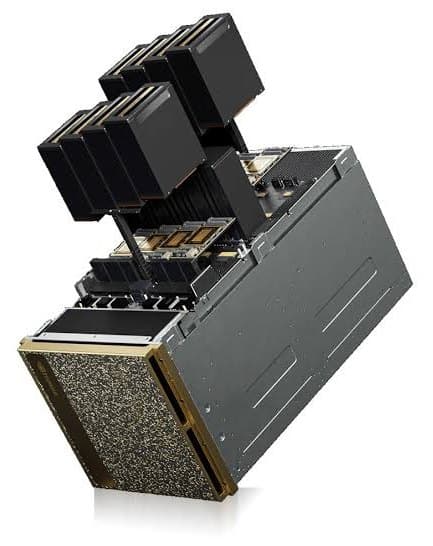
NVIDIA DGX B200
Eight Blackwell GPUs and 1,440GB of HBM3e in NVIDIA’s unified training and inference platform.
- One accountable vendor
- Blackwell generation
- A designed scaling path
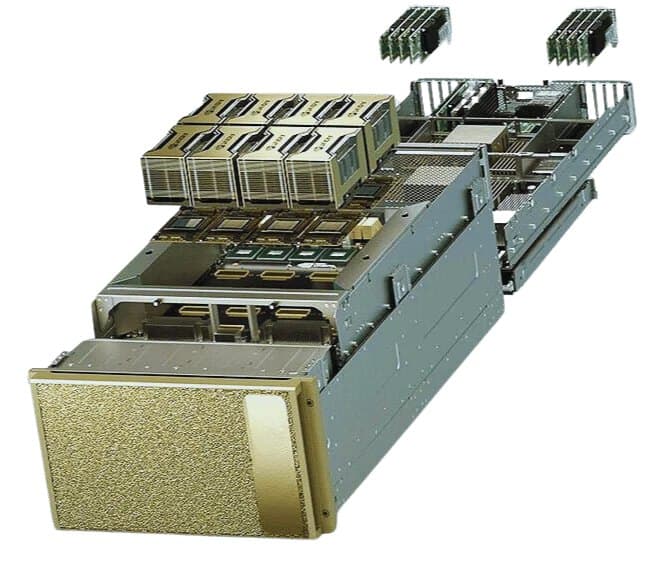
NVIDIA DGX H200
Eight H200 GPUs with 1,128GB of HBM3e, the memory-heavy Hopper DGX.
- More memory per GPU
- Same operational model
- Fewer nodes for inference
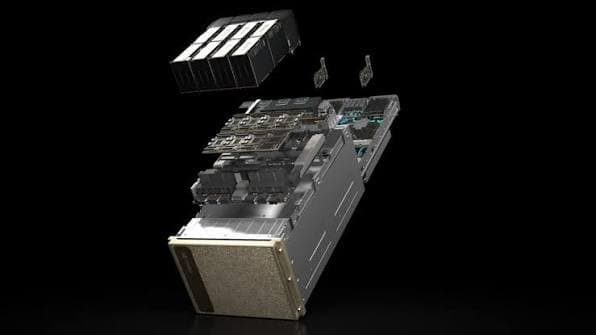
NVIDIA DGX H100
Eight H100 SXM5 GPUs and 640GB HBM3, the Hopper-generation DGX workhorse.
- Matches an existing estate
- Proven platform
- Cluster-ready networking
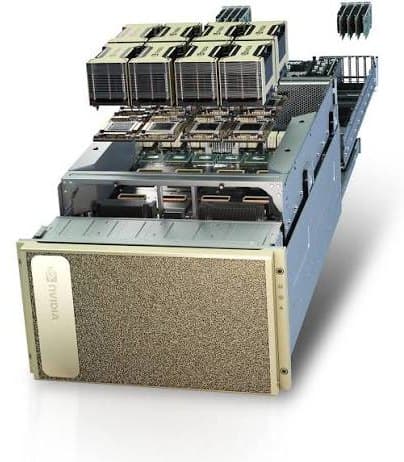
NVIDIA DGX A100 640GB
Eight A100 80GB GPUs with 640GB HBM2e and MIG partitioning across the node.
- MIG partitioning
- Matches an installed base
- Multi-tenant by design
NVIDIA DGX A100 320GB
Eight A100 40GB GPUs, the lower-memory DGX A100 configuration.
- Lower entry point
- MIG partitioning retained
- Matches an installed base
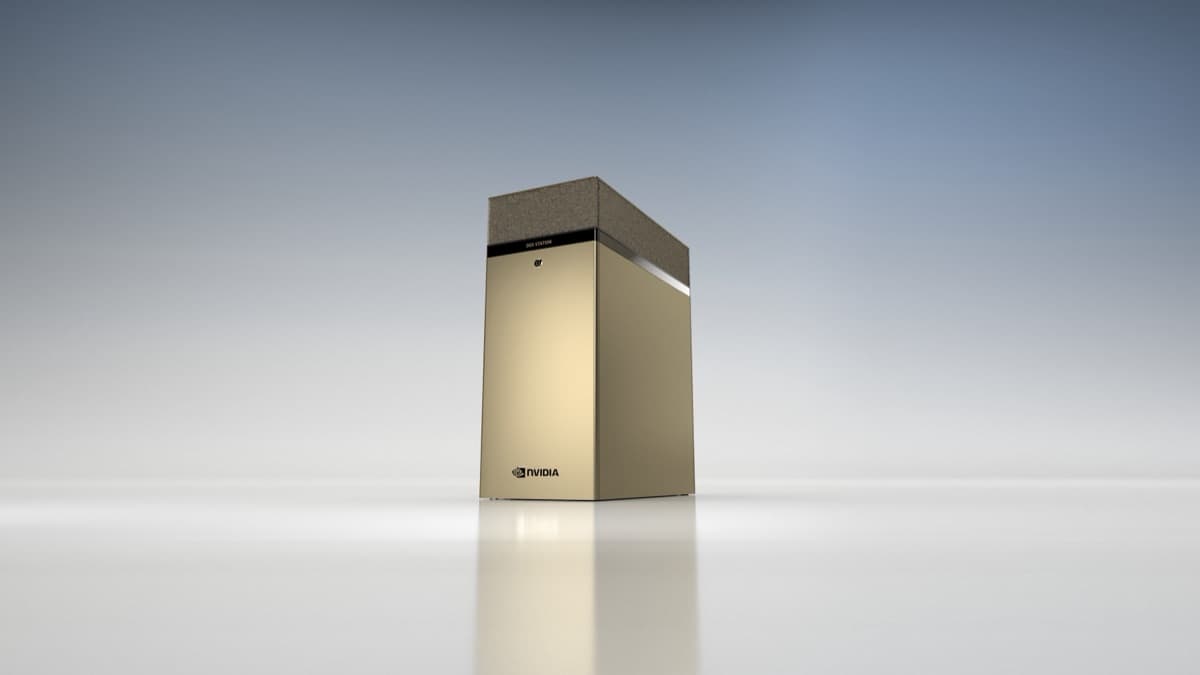
NVIDIA DGX Station A100
Four A100 GPUs, desk-side and refrigerant-cooled, a data-center-class node without the data center.
- No data center required
- NVLink at the desk
- MIG for shared use
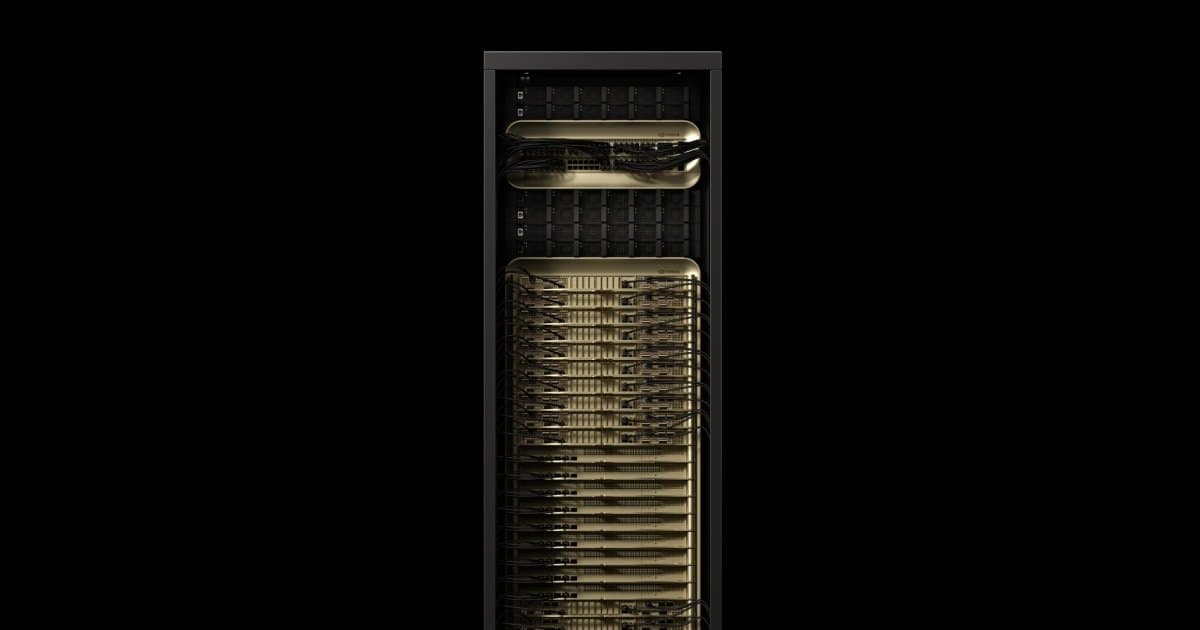
NVIDIA DGX GB200 NVL72
Seventy-two Blackwell GPUs and thirty-six Grace CPUs as one liquid-cooled NVLink domain.
- One NVLink domain
- Rack-scale density
- Delivered as a unit
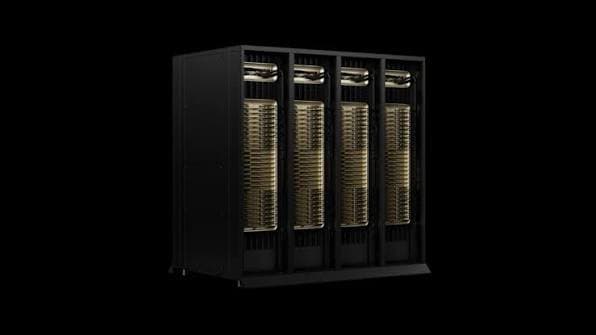
NVIDIA DGX SuperPOD
A reference architecture for multi-node DGX clusters, with fabric, storage and management designed together.
- Designed as one system
- A validated architecture
- Scales predictably
What we need to quote accurately
A configuration quote takes minutes when these are known and days of back-and-forth when they are not. You do not need all of them to start. Send what you have.
- The workload: model sizes, training or inference, and expected concurrency
- Node count, and whether this is a single system or a scaling cluster
- Rack power and cooling available per rack, and inlet temperature
- Existing estate: the vendor and management tooling you already run
- Network fabric: InfiniBand, Ethernet, and the speed you are standardised on
- Timeline, and whether the budget is approved or being built
How we quote
- 1
Send the requirement
An email, a bill of materials, or a rough description of the workload. All three work.
- 2
We validate the configuration
Accelerator, chassis, fabric, power and cooling checked against each other before anything is priced.
- 3
Itemised quote within 48 hours
Line-by-line pricing, current availability and lead time, with warranty terms stated.
NVIDIA DGX: buyer questions
How much does an NVIDIA DGX system cost?
It depends on the platform and on everything around it. DGX B200 and DGX H200 sit well above DGX A100, and on a multi-node build the InfiniBand fabric and parallel storage are a substantial share of the total on their own. We do not publish a figure because accelerator pricing moves with allocation and any number here would mislead you next quarter. Send us the workload and node count and you get an itemised quote within 48 business hours.
Which DGX platform should we buy?
B200 if you want the Blackwell generation and the largest GPU memory per node. H200 if the workload is inference-bound and memory is the constraint. H100 if you are extending an existing Hopper cluster, where matching what you already run matters more than newer silicon. A100 if you are adding to an Ampere estate or need MIG partitioning for multi-tenant serving. DGX Station if you need data-center GPUs with no data center. We will say which applies rather than defaulting to the newest.
Do we need a DGX SuperPOD, or just several DGX nodes?
Many teams asking about SuperPOD are better served by a handful of nodes with a properly designed fabric, and we would rather tell you that than sell the heavier architecture. SuperPOD is a reference design that matters when you are scaling predictably and want the fabric, storage and management specified as one validated pattern. Below that scale, the design work is smaller and the same principles apply.
Can you supply the fabric, storage and racking with it?
Yes, and they belong on the same quote. We specify the InfiniBand switches, adapters, optics and cable lengths, the parallel storage tier, the management network and the rack power together with the nodes, so what arrives is a working cluster rather than a set of servers.
Compare with other platforms
Comparison
DGX vs HGX: which 8-GPU system should you buy?
View systemsNVIDIA Blackwell Systems
NVIDIA B200 & GB200 Blackwell Servers
View systemsNVIDIA H100 Systems
NVIDIA H100 Servers
View systemsPricing
AI server price: what actually drives the number
View systemsBrowse the full range of GPU servers and AI clusters, or the component catalogue for drives, memory, optics and spares.