
Data Center Networking Solutions
High-performance fabric for AI clusters, storage, and demanding data-center workloads.
We help you choose, configure, and deliver the right system. No obligation.
Configuration at a Glance
Tailored per engagement. Full technical overview below.
Overview
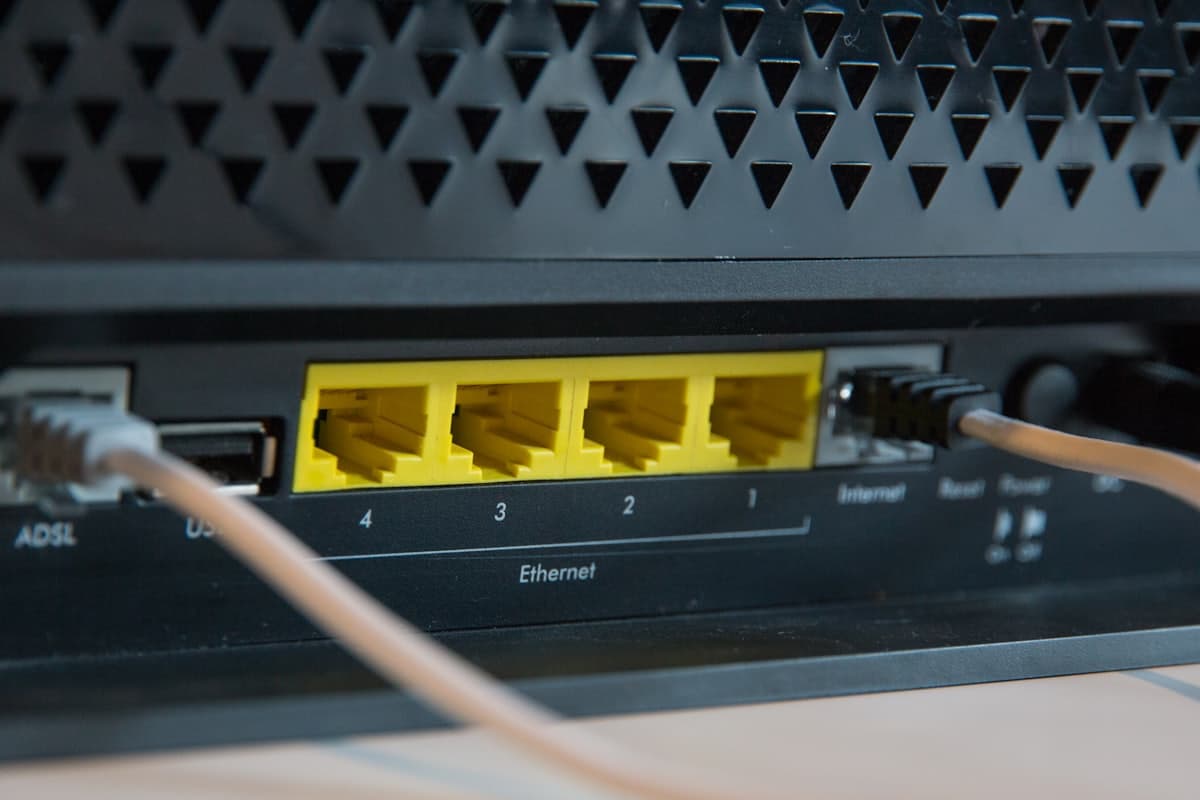
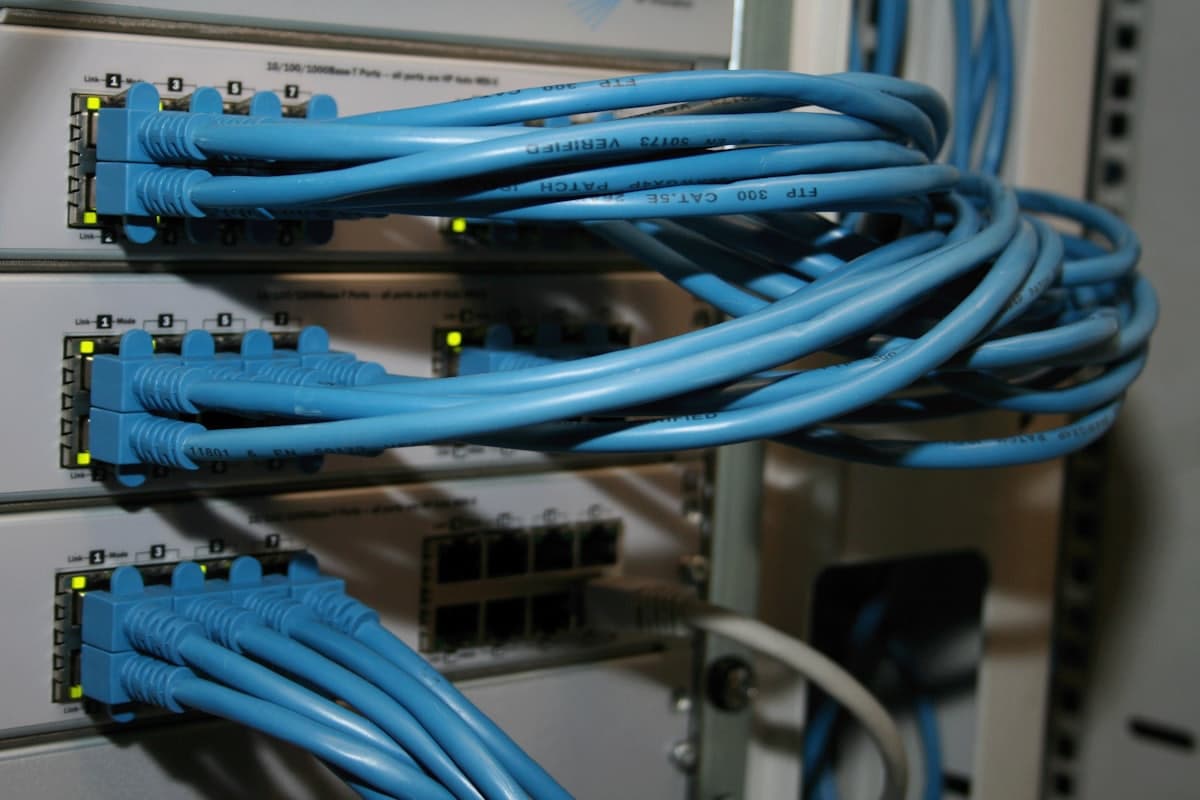
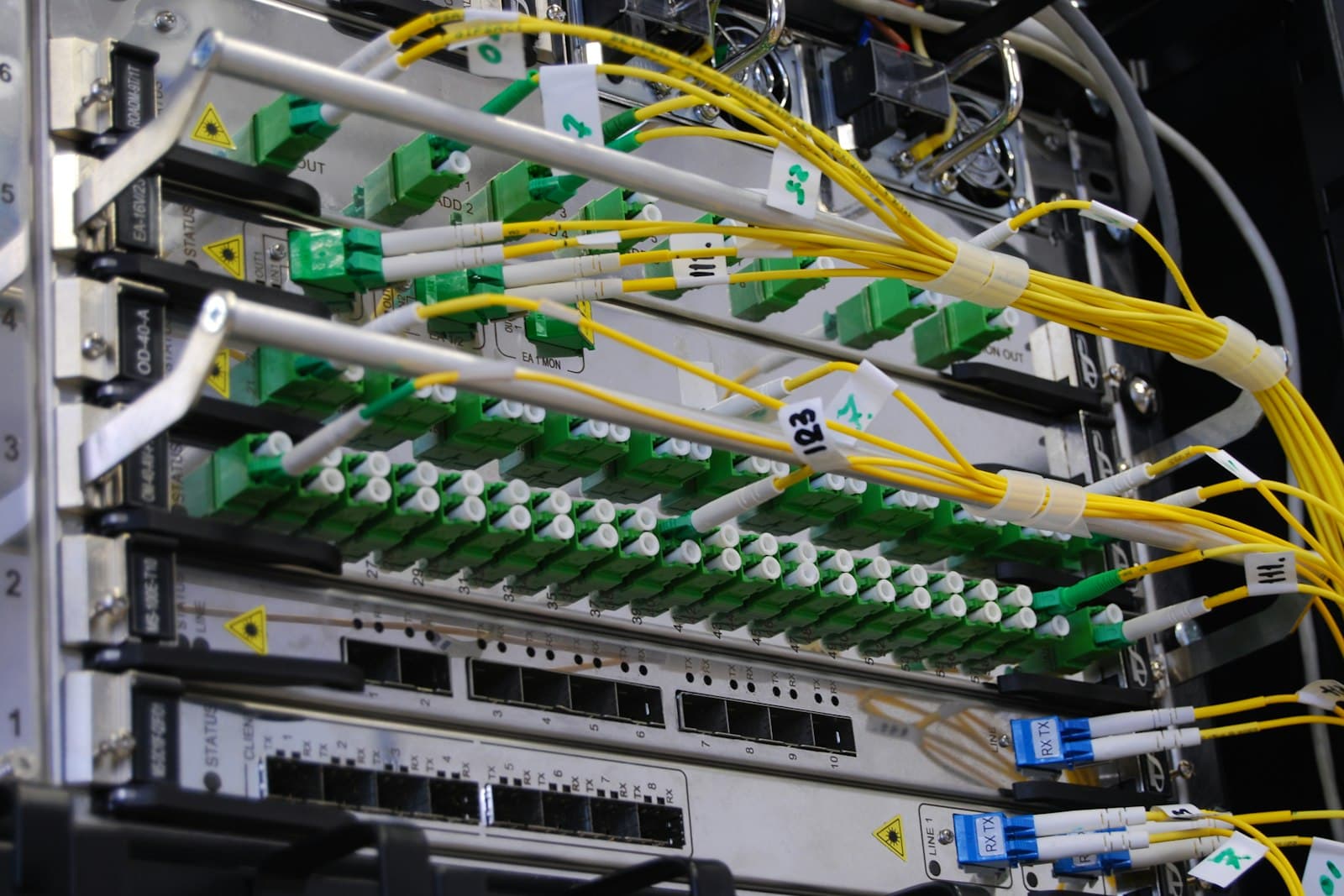
Data Center Networking Solutions cover the high-speed fabric that connects servers, GPUs, and storage in modern data centers, including the InfiniBand and high-speed Ethernet that AI clusters depend on. Nexus Compute designs and sources the right fabric, vendor-neutrally, for your performance and scale requirements. On a multi-node training job the fabric is not a supporting component; it is a term in the throughput equation. Distributed training is synchronous: each step ends with the nodes exchanging and combining gradients, and no node starts the next step until that exchange finishes. The slowest link therefore sets the pace for every GPU in the cluster, and any time spent waiting is time the most expensive hardware you own spends idle. That is why we specify the fabric with the compute rather than after it: the switch, the adapters per node, the cable lengths, and the rack layout are one decision, and the commonest way an AI build overruns is buying the nodes first and pricing the fabric afterwards. The GPU servers this fabric connects are at /products/gpu-servers, and we quote both together.
Who This Solution Is For
Business Benefits
Performance that unlocks GPUs
The right fabric ensures GPUs and storage are not bottlenecked by the network.
Vendor-neutral design
We choose the best fabric (InfiniBand or Ethernet, across vendors) for your workload, not a single brand.
Designed for scale
Non-blocking topologies grow with your cluster without re-architecting.
Integrated with compute
We design networking alongside your GPU and storage infrastructure as one system.
Typical Business Use Cases
AI/HPC cluster interconnect (InfiniBand or RoCE)
High-speed server-to-storage fabric
Leaf-spine data-center architecture
Low-latency, lossless networking for demanding workloads
Rail-optimized wiring for multi-adapter GPU nodes
Expanding an existing cluster without re-cabling what is already installed
Industry Applications
Technical Overview
High-performance data-center fabric spanning InfiniBand (HDR/NDR) and high-speed Ethernet (100/400GbE) in non-blocking leaf-spine topologies, with the congestion control and lossless features AI and storage workloads require. Designed vendor-neutrally to your cluster. Scale changes the shape of that design more than most buyers expect. At around eight nodes a single switch can usually hold every adapter, the topology is one tier, and the design question is mainly which adapters and which cables. Somewhere between sixteen and thirty-two nodes you cross into two tiers, and the spine layer, the uplink ratio between leaf and spine, and the cable plan start to dominate both cost and installation time. By sixty-four nodes and beyond the fabric is a substantial line in the budget in its own right, rail-optimized wiring (keeping the corresponding adapter of every node on the same leaf so collective operations traverse as few hops as possible) becomes the standard pattern, and the number of optical transceivers alone can rival the switch cost. Storage and management traffic are planned as separate paths rather than as guests on the compute fabric, because a checkpoint burst arriving in the middle of a gradient exchange is contention you designed in yourself.
| InfiniBand | HDR / NDR (200–400Gb/s) for AI clusters |
| Ethernet | 100 / 400GbE with RoCE support |
| Topology | Non-blocking leaf-spine |
| Features | Lossless / congestion control for AI & storage |
| Vendors | Vendor-neutral (NVIDIA/Mellanox, Cisco, others) |
| Scale | Rack to multi-rack cluster |
| Engagement | Design, sourcing, and delivery |
Specifications are indicative and configured to each engagement. Request a quote for a configuration tailored to your requirements.
Warranty, Support & Fulfillment
Every system ships from an authorized channel, configured and tested, with the documentation enterprise buyers need: genuine product, backed by the full manufacturer warranty.
Enterprise Warranty
Full manufacturer warranty with optional on-site, next-business-day support and extended coverage.
Authorized Channel
Sourced through Tier-1 distribution and OEM partners (never grey market). Asset & warranty records included.
Lead Time & Deployment
48-hour quotes, then configured, burn-in tested, and delivered on a committed schedule.
Nationwide Fulfillment
Coordinated logistics, rack-and-stack, and delivery wherever your infrastructure lives.
Frequently Asked Questions
InfiniBand or Ethernet for our AI cluster?
InfiniBand typically leads for tightly-coupled training at scale; high-speed Ethernet with RoCE is flexible and often sufficient for inference and mixed workloads. We design vendor-neutrally around your workload. The honest framing is this: InfiniBand is a purpose-built fabric with lossless behavior and adaptive routing designed in, which is why large training clusters keep choosing it, and the cost is a second technology for your team to operate. Ethernet gives you one operational model, a wider vendor pool, and staff who already know it, but lossless behavior has to be configured and kept correct through flow control and congestion notification, and a misconfigured RoCE fabric fails in ways that look like a slow model rather than a network fault. If most of your work is inference or single-node, Ethernet is usually the right answer. If it is multi-node training at scale, InfiniBand deserves serious consideration.
Do you design the whole fabric?
Yes, we design the topology and source the switches, adapters, and cabling as a coherent system integrated with your compute and storage. That includes the parts that are easy to leave off a bill of materials and expensive to add late: the transceiver on each end of every link, the correct cable lengths measured against the real rack elevation rather than estimated, breakout cables where a switch port feeds several adapters, the separate management network, and the port count kept in reserve for the next expansion.
Can it scale as our cluster grows?
Yes. We design non-blocking topologies that expand by adding leaf/spine capacity without redesign. The condition is that the target size is stated at the start, because the switch you choose sets the ceiling: the port count determines how many nodes fit in one tier, and crossing that line means adding a spine layer, more optics, and re-cabling work on a cluster that is by then in production. Telling us the two-year plan, not just the first purchase, is what makes the growth cheap.
What does oversubscription cost us in practice?
More than it does on a general-purpose network. Ordinary data-center traffic is bursty and uncorrelated, so a 3:1 or 4:1 uplink ratio is normal and mostly invisible. Training traffic is the opposite: every node transmits at the same moment in the step, so a contended uplink is contended for all of them at once and shows up directly as a longer step time and idle GPUs. Non-blocking is the default we design toward for training fabrics, and where a ratio is accepted for budget reasons we say what it is and where it will be felt.
How much of the cost is cabling and optics?
Enough that it belongs in the first budget rather than the last. Every link needs a transceiver at each end unless it is short enough for a direct-attach copper cable, and reach limits are what decide whether the switch can sit two racks away or has to sit in this one. Active optical and fiber runs cost more and take longer to source than copper. At cluster scale the optics count scales with ports rather than with nodes, which is why a fabric priced from switch list prices alone is always priced low.
Why must the switch be chosen with the cluster rather than after it?
Because the fabric decides the physical build. The number of adapters per GPU node sets the port count; the port count sets the switch and whether you need one tier or two; the switch position and cable reach set which nodes go in which rack; and the rack layout sets power and cooling per rack. Deciding the fabric after the nodes are racked means re-cabling, frequently re-racking, and a delay measured against a cluster that is already depreciating. It is the single most common way one of these projects goes over budget.
Hardware Assistance
Configure the Data Center Networking Solutions with Nexus Compute
Tell us your requirements and a hardware specialist will help you specify, configure, and quote the right system, typically within two business days. No obligation.