
AI Research Workstation
A flexible research platform for labs that need to reconfigure as projects evolve.
We help you choose, configure, and deliver the right system. No obligation.
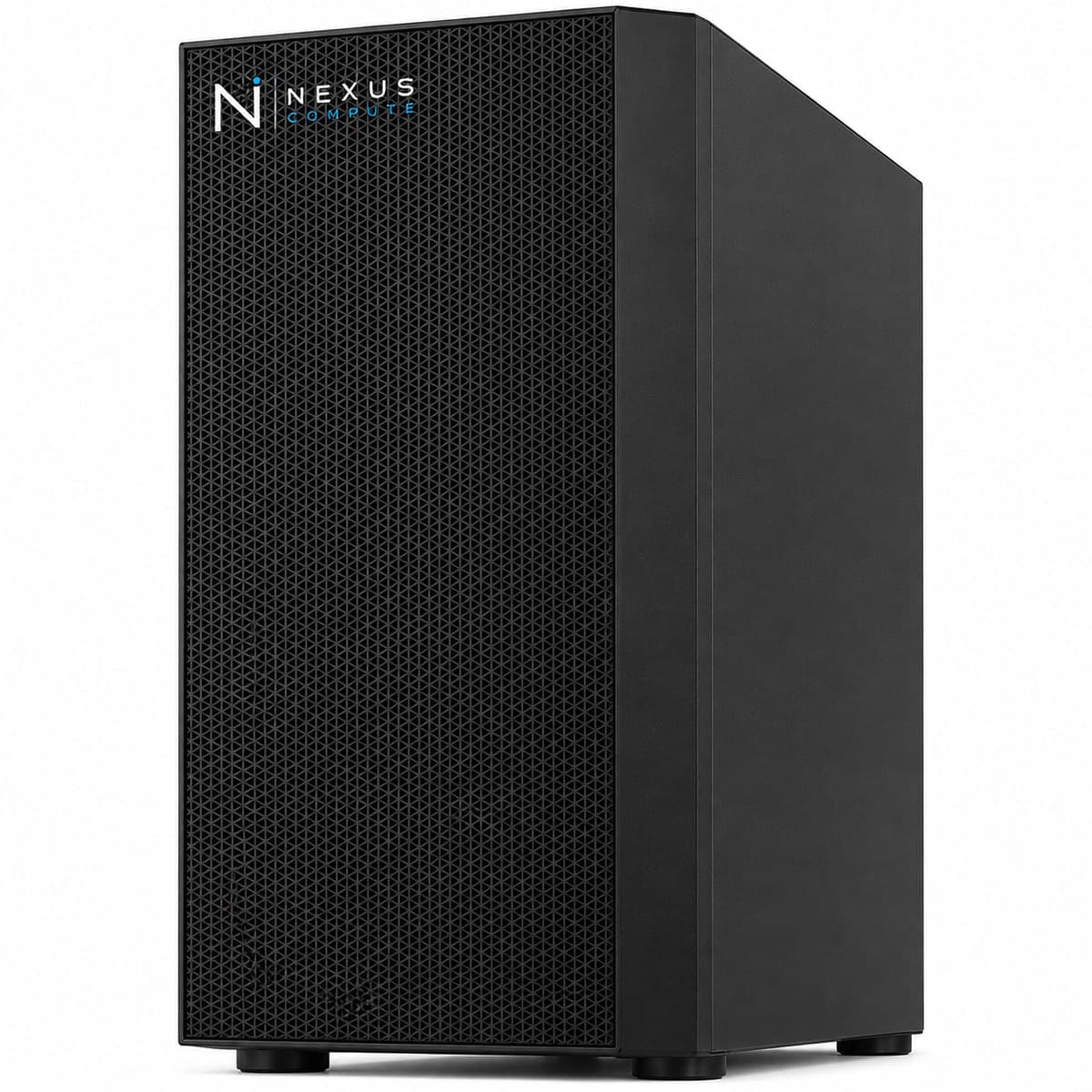
Configuration at a Glance
Tailored per engagement. Full technical overview below.
Configuration Options
Core specifications for this system. Every component is configurable to your workload, so request a quote for a tailored build.
NVIDIA RTX 5090 / RTX PRO 6000 (configurable)
AMD Threadripper PRO
128GB–512GB DDR5 ECC
Configurable NVMe + expansion
Overview
The AI Research Workstation is specified for academic and corporate research teams whose workloads change from project to project. Nexus Compute configures a flexible, upgradeable platform and supports the purchase-order and grant-procurement processes that research institutions require. Research buying has a constraint that commercial buying does not: the machine is usually specified against a funding round rather than a workload, and the workload changes before the funding does. So the platform is chosen for headroom: memory slots and storage bays left free, a power supply sized above the initial GPU, and a chassis that will take a larger card later, rather than for the tightest configuration that meets today's project. The other recurring requirement is reproducibility. A documented, version-pinned software stack is not administrative overhead here; it is what allows a result to be reproduced after the student who produced it has graduated. Where a lab shares one machine between several investigators, we will also be direct about the limits: a workstation serves one job at a time well and several badly, and past a certain point a shared server is the better use of the grant.
Who This Solution Is For
Business Benefits
Reconfigurable as research evolves
An upgradeable platform adapts to new projects without a full hardware refresh.
Procurement process support
We work within purchase-order, grant, and institutional procurement workflows.
Reproducible environments
Documented, version-pinned software stacks support reproducible research.
Advisory on the right configuration
Our specialists help match hardware to your research methodology and budget.
Typical Business Use Cases
Exploratory model architecture research
Reproducible experimentation with documented environments
Shared lab compute for multiple researchers
Grant-funded AI and computational science projects
Teaching and supervised project work needing consistent environments
Pilot work sized to justify a later cluster or shared-server bid
Mixed workloads where the next project may be vision, language or simulation
Industry Applications
Technical Overview
A configurable, upgradeable platform supporting RTX-class GPUs, large ECC memory, and expandable storage. We specify the exact configuration around your research workloads and institutional requirements. Upgradeability is a specification decision made at build time rather than a property that appears later: it means leaving memory slots free within the 128GB to 512GB range, choosing a power supply with headroom above the GPU actually fitted, and keeping storage bays and PCIe slots available. ECC memory is specified as standard because a silent bit error in a long run is a research problem, not just an operational one: it produces a result that is wrong rather than a job that fails visibly. Sizing rules are the same as elsewhere: VRAM sets the model ceiling at roughly two bytes per parameter at BF16 or half a byte at 4-bit, system memory should sit comfortably above twice the VRAM, and datasets should be staged on local NVMe rather than read across the campus network, which is very often the real bottleneck in an institutional setting.
| GPU Options | NVIDIA RTX 5090 / RTX PRO 6000 (configurable) |
| CPU | AMD Threadripper PRO |
| System Memory | 128GB–512GB DDR5 ECC |
| Storage | Configurable NVMe + expansion |
| Operating System | Ubuntu 22.04 LTS (research stack) |
| Procurement | PO, grant, and institutional process support |
| Warranty | 3-year on-site, next-business-day |
| GPU Memory Bandwidth | Up to 1,792 GB/s (GDDR7 on both GPU options) |
| GPU VRAM Range | 32GB (RTX 5090) up to 96GB ECC (RTX PRO 6000) |
| CPU Platform | sTR5 socket / WRX90 chipset, 8-channel DDR5 ECC, up to 128 PCIe 5.0 lanes |
Specifications are indicative and configured to each engagement. Request a quote for a configuration tailored to your requirements.
Warranty, Support & Fulfillment
Every system ships from an authorized channel, configured and tested, with the documentation enterprise buyers need: genuine product, backed by the full manufacturer warranty.
Enterprise Warranty
Full manufacturer warranty with optional on-site, next-business-day support and extended coverage.
Authorized Channel
Sourced through Tier-1 distribution and OEM partners (never grey market). Asset & warranty records included.
Lead Time & Deployment
48-hour quotes, then configured, burn-in tested, and delivered on a committed schedule.
Nationwide Fulfillment
Coordinated logistics, rack-and-stack, and delivery wherever your infrastructure lives.
Frequently Asked Questions
Do you support university purchase orders?
Yes. We are set up to work with institutional purchase orders, grant procurement, and the documentation research finance offices require. That includes formal quotations valid for your approval cycle, itemized specifications suitable for a competitive process, and the asset and warranty records estates and finance teams ask for at delivery. If your institution has a mandated framework or a required quotation format, tell us at the start and we will work within it.
Can the workstation be upgraded later?
Yes, we specify an upgradeable platform so GPUs, memory, and storage can be expanded as projects evolve. The practical caveat is that upgradeability has to be designed in: if the power supply is sized exactly to the GPU fitted on day one, a larger card later means a new supply, and if every memory slot is populated at 128GB then adding memory means replacing it rather than adding to it. Tell us where the research might go and we will leave the headroom in the right places, which usually costs very little at build time.
How do you support reproducible environments?
We pin and document the operating system, driver, CUDA and framework versions on delivery, so the environment can be rebuilt or replicated rather than reconstructed from memory. For labs, we can apply the same documented image across several machines so results move between them without a version investigation. This is the single most useful thing a supplier can do for a research group, and it costs nothing extra to ask for.
Can you outfit a whole lab?
Yes. We standardize configurations across multiple units and coordinate delivery to your facility. Before you order several, it is worth checking the room: each unit needs its own circuit capacity and returns most of what it draws as heat, and four workstations in a small lab is a cooling and electrical question as much as a procurement one. We will ask about the intended room, and we would rather raise it now than have you discover it on installation day.
Several researchers need to share it. Will that work?
Up to a point. A workstation runs one heavy job well and several badly, because the GPU is not meaningfully divisible for training work and jobs queue behind each other. Two or three researchers with staggered schedules usually cope; five sharing one machine means everyone waits. If that is the shape of your lab, a shared server with a scheduler is a better use of the same money (see /products/gpu-servers), and we will say so rather than sell a machine that becomes a booking dispute.
What should we have ready to get a useful quote?
The research workloads you expect over the funding period rather than only the current project, the largest model sizes you anticipate, your dataset volumes, the number of people sharing the machine, your institutional procurement route, and any facility constraints: available circuit, room cooling, and whether it sits in an office or a lab. Deadlines matter too, because grant end dates and hardware allocation do not always align and it is better to plan around that early.
Hardware Assistance
Configure the AI Research Workstation with Nexus Compute
Tell us your requirements and a hardware specialist will help you specify, configure, and quote the right system, typically within two business days. No obligation.