
NVIDIA Tesla K80 Price: What Drives It and What Replaces It
The Tesla K80 is a legacy Kepler GPU priced by remaining supply. Buy it only for like-for-like repair; for new inference the L4, A2 or A10 replace it.
If you are pricing an NVIDIA Tesla K80, the first question is why you need one. The K80 is a Kepler-generation data center GPU that current NVIDIA software has left behind. For a like-for-like repair in a system that was validated around it, a new K80 is a sensible purchase. For anything new, a current card such as the L4 draws a fraction of the power, fits more servers and runs today's software. This guide explains what the K80 is, what drives its price and which current GPUs replace it.
What is the NVIDIA Tesla K80?
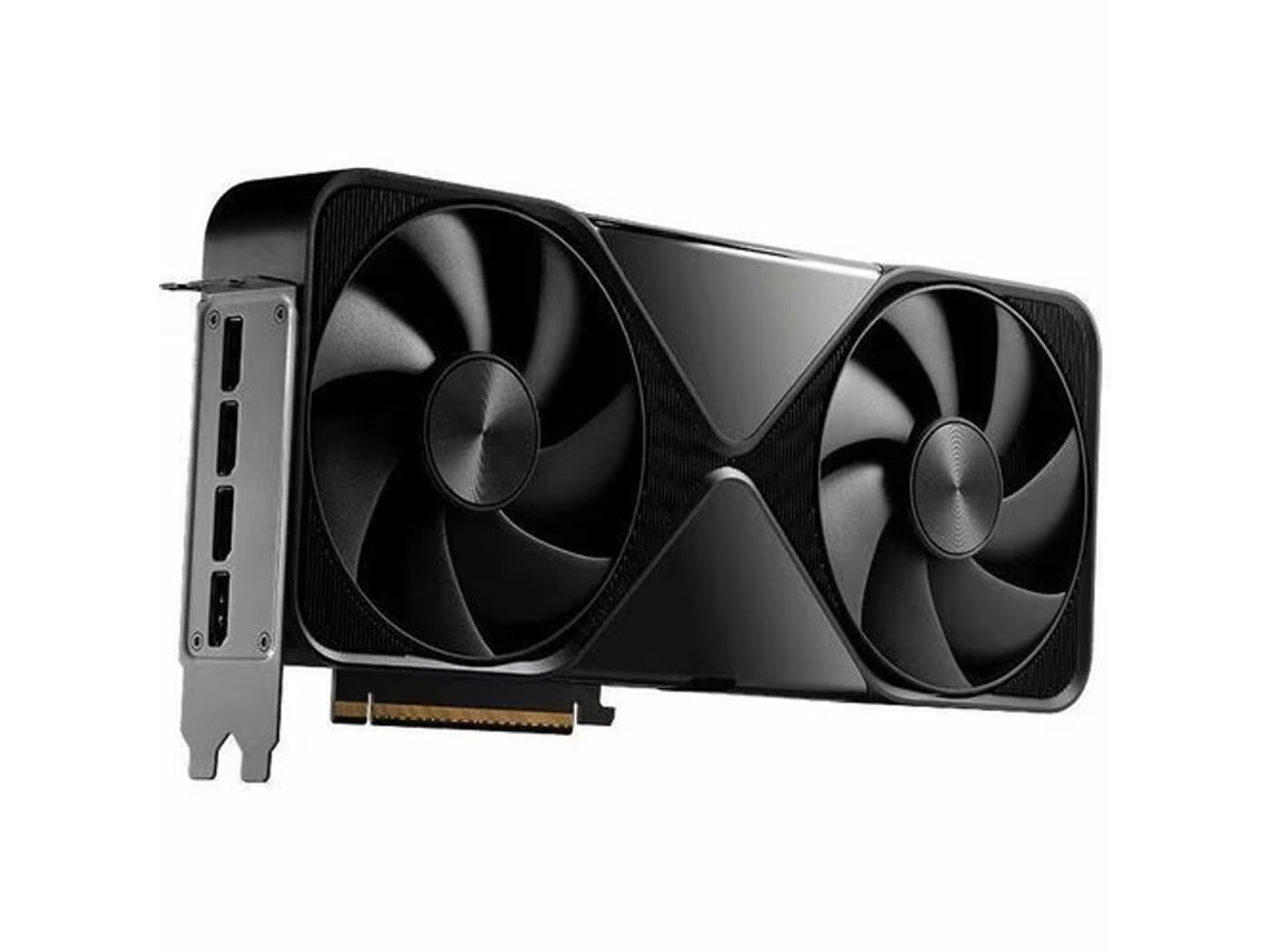
The Tesla K80 is a full-height, full-length, dual-slot PCIe 3.0 x16 accelerator with 24GB of GDDR5 memory and a 300W TDP. It is passively cooled and depends on directed airflow from the server chassis, so it is a server part, not a workstation card, and it has no display outputs.
The detail that matters most for planning: the K80 is two Kepler GPUs on one board. The operating system and CUDA see two devices, each with half of the 24GB. A single model or process on a K80 therefore works within 12GB unless the software is written to span both GPUs. Keep that in mind when comparing it with the single-GPU cards below.
Why is the Tesla K80 a legacy part?
Kepler launched more than a decade ago, and NVIDIA has since moved it to legacy status. Current CUDA toolkit releases no longer support Kepler GPUs, and current builds of mainstream frameworks such as PyTorch and TensorFlow do not target them. A K80 system stays on an older driver branch and an older CUDA version, which in turn limits the operating system and library versions you can run. Over time that becomes a maintenance and security question as much as a performance one: kernel updates, container base images and framework patches all move on, and the K80 host has to be held back to keep working.
The architecture also predates the features modern inference relies on. Kepler has no Tensor Cores and none of the reduced-precision paths later generations added, so per watt a K80 does far less useful work than a current card.
What drives the NVIDIA Tesla K80 price?
- Remaining new supply. The K80 is no longer in production, so new units come from a finite pool. Scarcity, not capability, sets the price.
- Installed-base demand. Organizations maintaining validated K80 systems need exact replacements, which keeps demand for a legacy part higher than its performance suggests.
- OEM variants. Server vendors shipped K80s under their own part numbers, and matching the variant your system expects can narrow supply further.
- Condition and provenance. Nexus Compute sells new hardware only. Legacy GPUs attract grey-market listings with unclear history and no warranty; they look cheaper but are not a comparable purchase.
- Quantity. One spare is priced differently from a batch bought to keep a cluster homogeneous.
Because pricing moves with that supply, we do not publish a fixed figure here. The current price is on the product page, or request a quote and we confirm availability and pricing within 48 business hours. For why provenance matters on older GPUs, see our guide to grey-market GPU risks.
When is buying a K80 still the right call?
Buy a K80 when replacing it with anything else costs more than the card. That is usually the case when:
- The system is validated or certified as a whole, for example an appliance, instrument controller or regulated environment where changing the GPU triggers requalification.
- The software stack is pinned to an older CUDA version and cannot be rebuilt on your timeline.
- You are keeping a spares pool for a fleet with a defined retirement date.
- A cluster relies on identical nodes and one card has failed, and mixing GPU generations would break scheduling or software assumptions.
- The system is scheduled for replacement within its current budget cycle, and a like-for-like repair keeps it running until then at the lowest engineering cost.
Which current GPUs replace the Tesla K80 for inference?
- NVIDIA L4 24GB: 24GB GDDR6 on a single GPU, 72W TDP, single-slot low-profile, PCIe 4.0 x16, passive. The closest replacement: the same 24GB total, all of it addressable by one GPU, at about a quarter of the K80's TDP. OEM kits exist for Dell PowerEdge (R750, R760, R7525 and XE series) and HPE ProLiant (DL380, DL385 and Apollo series), with the riser, power cable and firmware that reports correctly to the management controller.
- NVIDIA A2 16GB: Ampere, 16GB GDDR6, 60W TDP, PCIe 4.0 x16, passive. An entry inference card for lightweight models, video analytics and edge servers. Its 16GB on one GPU is more usable memory per model than either half of a K80.
- NVIDIA A10 24GB: Ampere, 24GB GDDR6, 150W TDP, PCIe 4.0 x16, passive. The step up for heavier inference, larger models and mixed graphics or virtual desktop work, at half the K80's TDP.
- NVIDIA Tesla P40 24GB: Pascal, 250W, PCIe 3.0 x16. Newer than the K80 but also an older generation with narrowing software support. Buy it to repair P40 systems, not as a K80 upgrade.
- NVIDIA RTX A2000 12GB: an Ampere workstation card with an active blower and 70W TDP. Relevant only for workstations, not as a server replacement.
What should you check before swapping a K80 for a current card?
- Slot and riser. PCIe 4.0 cards run in PCIe 3.0 slots at PCIe 3.0 speed. Confirm the slot and riser the server provides for the new card's form factor.
- Airflow. The K80, L4, A2 and A10 are all passive and rely on chassis airflow. Use the server vendor's GPU fan and baffle configuration.
- Power cabling. The K80's auxiliary power is sized for a 300W card. Confirm the power connection the replacement needs in your chassis.
- Platform qualification. OEM servers support GPUs on their compatibility list, and OEM GPU kits ship with the correct riser and firmware.
- Software. A current GPU needs a current driver and CUDA version, which may mean updating the OS and rebuilding the application. That is usually the real project, and the reason the K80 stayed in service.
A K80 is a repair part. Price it against the cost of requalifying the system around it, not against a current GPU.
Where can I buy a Tesla K80 or a current replacement?
Nexus Compute supplies the Tesla K80 and current data center GPUs new, sourced through authorized distribution with the full manufacturer warranty. Tell us the server model, the slot and riser in use and what the card runs, and we check compatibility against your platform before dispatch. If you are undecided between repair and replacement, that is a normal request: we can quote a new K80 for the immediate fix alongside an L4 or A10 configuration for the replacement project, so the budget conversation happens with both numbers on the table. Browse GPUs and accelerators to compare memory, TDP and form factor across current cards.
Frequently asked questions
What is the Nvidia Tesla K80 GPU price?
The K80 has no fixed market price because it is a legacy part: pricing follows the remaining supply of new units and demand from existing installations, not performance. Nexus Compute shows current pricing on the product page and quotes within 48 business hours. If you are not replacing a failed card in a validated system, price a current NVIDIA L4 first.
Does the Tesla K80 still work with current CUDA and PyTorch?
No. Current CUDA toolkit releases have dropped Kepler support, and current framework builds do not target it. K80 systems run on older driver branches and older CUDA versions, which is workable for a pinned, validated stack and a problem for anything new.
Is the Tesla K80 one GPU or two?
Two. The K80 carries two Kepler GPUs on one board, and its 24GB of GDDR5 is split between them. Software sees two devices with half the memory each.
What is the best replacement for a Tesla K80 for inference?
For most servers, the NVIDIA L4 24GB: the same 24GB total on a single GPU, a 72W TDP against the K80's 300W, and a single-slot low-profile card that fits more chassis. The A2 16GB suits lighter edge inference and the A10 24GB suits heavier models.
Can I install an NVIDIA L4 in a server that had a K80?
Usually, if the server vendor lists the L4 as supported for that model. The L4 is PCIe 4.0 but runs in PCIe 3.0 slots, and its low profile and low power make it easier to fit. Check the vendor's GPU compatibility list and use an OEM GPU kit where one exists.
Systems covered in this article
NVIDIA Tesla K80 24GB
Current pricing and availability for like-for-like replacement.
NVIDIA L4 24GB
The current low-power inference card that replaces the K80 in most servers.
GPUs and accelerators
Compare every data center GPU we list by memory, TDP and form factor.
Grey-market GPU risks
Why provenance matters most when buying legacy GPUs.
Planning a hardware investment?
Tell us what you're trying to build. A procurement specialist will help you specify and quote the right configuration within 48 business hours, no obligation.