
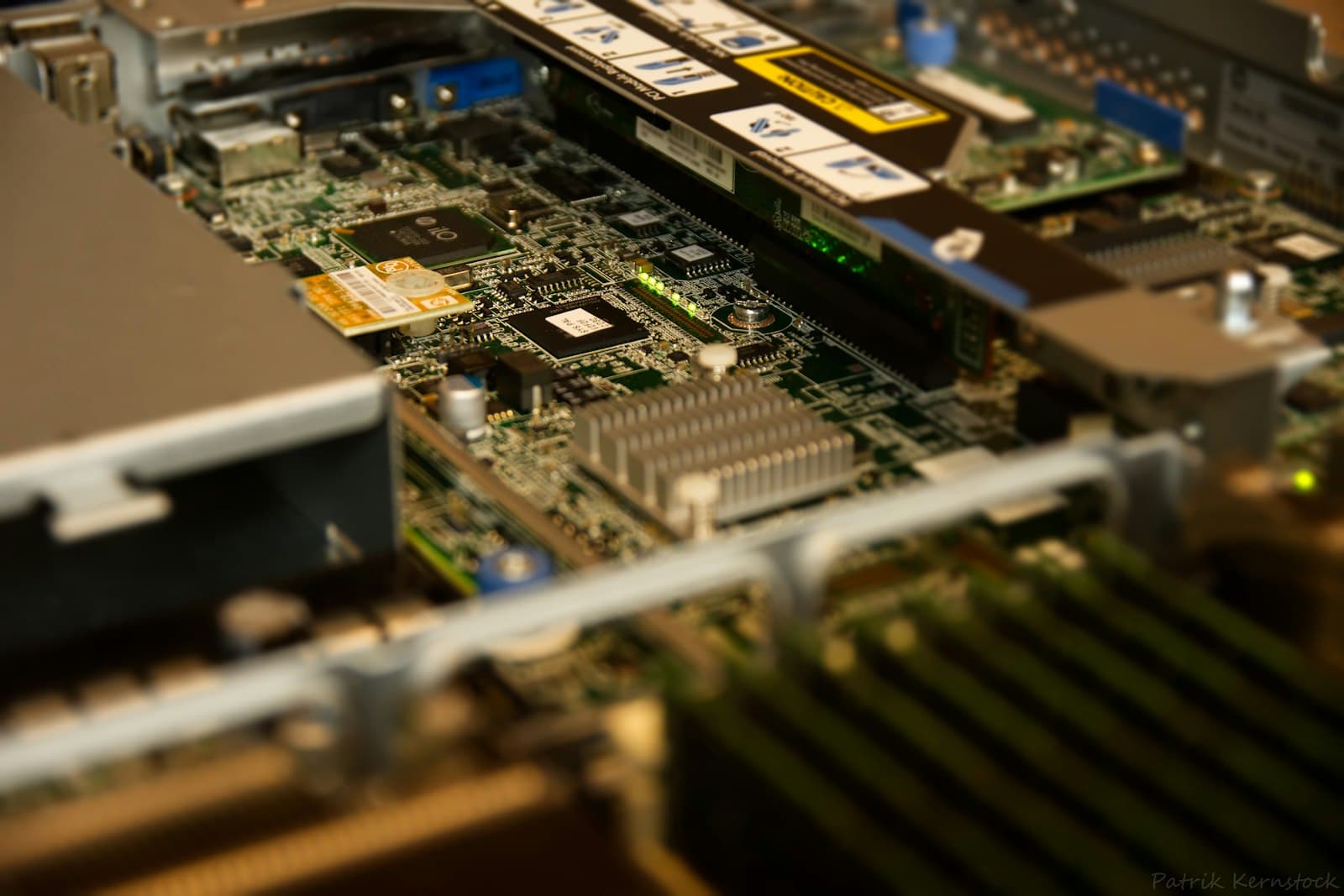
Choosing a Server Motherboard: OEM Dell/HPE Boards vs Supermicro Whitebox
Replacing a failed system board or building from bare components raises the same question: buy the OEM's exact part, or build on an open-market board from Supermicro, ASUS, or Tyan? The right answer depends on what you're actually optimizing for.
The motherboard decision arrives in one of two very different situations, and the right answer depends on which one you're actually in. A failed system board in a production PowerEdge or ProLiant is a repair decision. A new build from bare components is a design decision. Treating them the same way is how teams end up either overpaying for a repair or under-speccing a new system.
Repairing an existing server: buy the OEM part, almost always
If a Dell PowerEdge, HPE ProLiant, Cisco UCS or Lenovo ThinkSystem server has a failed system board, the OEM's exact replacement part is the right answer in the overwhelming majority of cases, and it's worth being clear about why. The system board on these platforms is deeply integrated with the chassis's management controller (iDRAC, iLO, XCC), its power delivery, its fan control curves, and its firmware validation chain. A third-party board, even one built on the same underlying chipset, will not run the OEM's management stack, will not be covered by any remaining OEM warranty or support contract, and in many cases will not physically fit the chassis's mounting points, I/O shield, or power connector pinout.
The OEM system board is a service part, typically identified by a part number rather than a marketed model name, and it's sourced either new from the vendor's spares channel or from a reputable refurbished-parts supplier who tests it before sale. Confirm the exact server model and generation before ordering: the same chassis generation frequently has multiple board revisions across its production run tied to specific CPU steppings or backplane configurations, and an ill-matched revision can boot but behave unpredictably.
Building new: this is where the real decision lives
When you're specifying a new server from bare components rather than repairing an existing one, the choice widens to open-market motherboards from Supermicro, ASUS Pro WS, Gigabyte, Tyan and ASRock Rack, alongside the option of simply buying a complete OEM system. This is the genuine build-versus-buy decision, and it turns on a few concrete questions rather than brand preference.
What an open-market board buys you
- Configuration freedom the fixed OEM SKUs often don't offer: a specific PCIe lane layout, an unusual memory configuration, or a chipset generation the OEM hasn't yet packaged into a shipping system.
- Frequently faster access to the newest CPU sockets and chipsets. Supermicro and the other whitebox motherboard vendors often ship boards for a new CPU generation before the tier-one OEMs finish validating and packaging their own systems around the same silicon.
- Lower cost at volume for organizations with the internal expertise to assemble, validate and support the resulting system themselves: you are buying the board and the freedom, and taking on the integration work in exchange.
- A path to a genuinely custom chassis (colocation-optimized density, an unusual form factor, a specific airflow design) that only makes sense once you own the motherboard decision independently of a chassis vendor's fixed catalog.
What you give up
A whitebox build is a system you (or your integrator) validate, not one the vendor validates for you as a unit. There's no single phone number that owns the whole stack when something goes wrong: the motherboard vendor supports the board, the CPU vendor supports the CPU, and if a rare interaction between the two is causing an intermittent fault, resolving it is your team's job to coordinate, not a support contract's. For an organization without in-house hardware validation expertise, or one that wants a single support relationship covering the whole chassis, that cost is real and often underestimated at the point of purchase.
Management is the other gap worth naming plainly. Supermicro's own boards ship with a capable BMC and IPMI/Redfish support, and it has improved substantially over the years, but it is not the same management ecosystem as iDRAC or iLO, with their vendor-specific automation, fleet-management tooling and support-contract integration. If your operations team has built tooling and runbooks around one of those platforms, a whitebox fleet means a second management stack to operate, not a replacement for the first.
A practical way to decide
If the server is a production system already running Dell, HPE, Cisco or Lenovo hardware and it has failed, buy the OEM part: the integration and support argument settles it. If you're building new and your team already operates a whitebox fleet with the validation expertise to support it, an open-market board is a legitimate and often more cost-effective choice, particularly at scale or for a configuration the OEM catalog doesn't offer. If you're building new without that expertise in-house, a complete OEM system, even at a higher unit cost, is very often the cheaper choice once the value of a single support relationship and a validated, tested configuration is counted honestly.
How Nexus Compute helps
As an independent procurement partner, we help you turn a motherboard or system-board decision into a concrete, validated configuration, genuine and fully warranted, quoted within 48 business hours. Tell us whether this is a repair on an existing chassis or a new build, and we'll match the exact OEM part or specify a whitebox platform against your CPU, memory and expansion requirements.
Systems covered in this article
Motherboards
Supermicro, ASUS Pro WS, Gigabyte, Tyan and ASRock Rack boards, plus OEM Dell/HPE/Lenovo system boards.
Server Processors
Xeon Scalable and EPYC CPUs matched to whichever socket and chipset the board decision lands on.
Request a Quote
Tell us whether this is a repair or a new build and we'll match the board to the rest of the system.
Planning a hardware investment?
Tell us what you're trying to build. A procurement specialist will help you specify and quote the right configuration within 48 business hours, no obligation.