
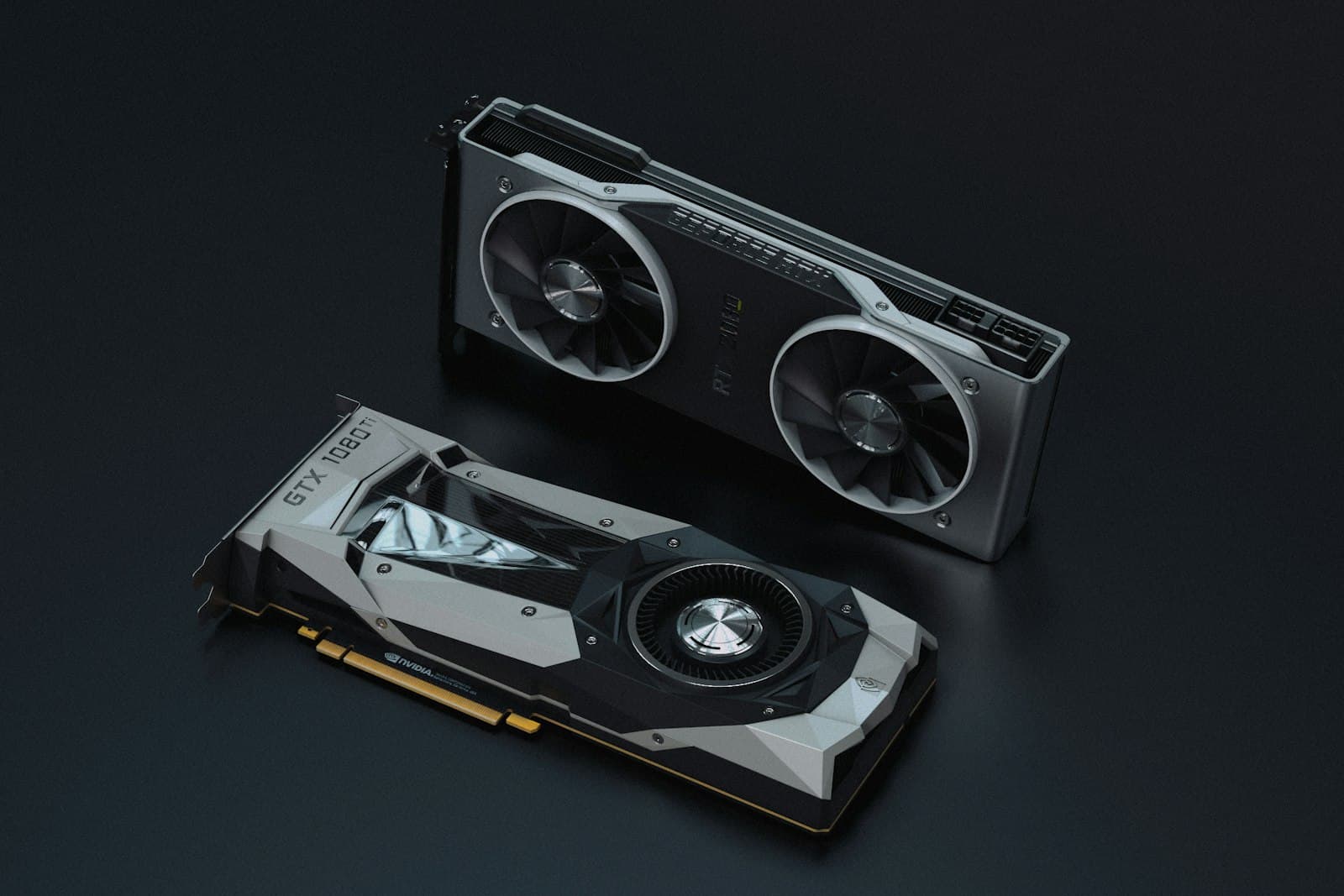
RTX 5090 32GB GDDR7: The Complete AI Workstation Guide
What the RTX 5090's 32GB of GDDR7 actually unlocks for local AI work: the models it runs, the workloads it suits, and how to build the rest of the machine around it.
The RTX 5090 is the most capable consumer GPU NVIDIA has ever shipped for AI work, and for a large share of developers and researchers it is the right card to put on a desk. Built on the Blackwell architecture with 32GB of GDDR7, it delivers data-center-class throughput at a fraction of the cost, provided the rest of the workstation is specified to keep up. This guide covers what the 5090 genuinely does well, where its limits are, and how to build around it.
What 32GB of GDDR7 changes
The jump from the previous generation's 24GB to 32GB of GDDR7 is more meaningful than the number suggests. GDDR7 raises memory bandwidth substantially over GDDR6X, and for AI inference (which is frequently memory-bandwidth-bound rather than compute-bound) that bandwidth translates directly into higher tokens per second. The extra 8GB also moves several popular model sizes from 'barely fits with aggressive quantization' to 'fits comfortably with usable context.'
Which models actually run
With 32GB of VRAM you have real headroom for local LLMs, image generation, and most fine-tuning experiments. The practical envelope looks like this:
- Quantized LLMs up to roughly 70B parameters (4-bit) with room for a working context window.
- Full-precision and FP16 inference on 7B–13B models with generous batch sizes.
- Stable Diffusion XL and FLUX image generation at high resolution without memory pressure.
- Parameter-efficient fine-tuning (LoRA / QLoRA) on 7B–13B models, and on larger models with offloading.
Where the 5090 stops and a bigger system starts
The honest limit is full-precision work on the largest models. Training a model from scratch, or running inference on a 70B+ model at full precision without quantization, exceeds what 32GB holds. For those workloads you want a single large memory pool: an RTX PRO 6000 with 96GB ECC, or a multi-GPU server. The 5090 is a development and inference workhorse, not a from-scratch training rig.
Build the machine, not just the GPU
A 5090 starved of data, power, or cooling underperforms a slower card that is properly fed. The platform that consistently does it justice is AMD Threadripper PRO: abundant PCIe Gen5 lanes, high core counts for data preprocessing, and support for 128GB or more of DDR5 ECC system memory. Pair that with PCIe Gen5 NVMe storage so the GPU is never waiting on disk, and a power and thermal design rated for the 5090's sustained draw under continuous load, not just bursty gaming peaks.
Nexus Compute configures RTX 5090 workstations on the Threadripper PRO platform, validates the thermal and power design under sustained AI load, ships them with the CUDA toolchain pre-installed, and backs each unit with warranty. We can turn your workload into a tested configuration and a quote within 48 business hours.
Systems covered in this article
Planning a hardware investment?
Tell us what you're trying to build. A procurement specialist will help you specify and quote the right configuration within 48 business hours, no obligation.