
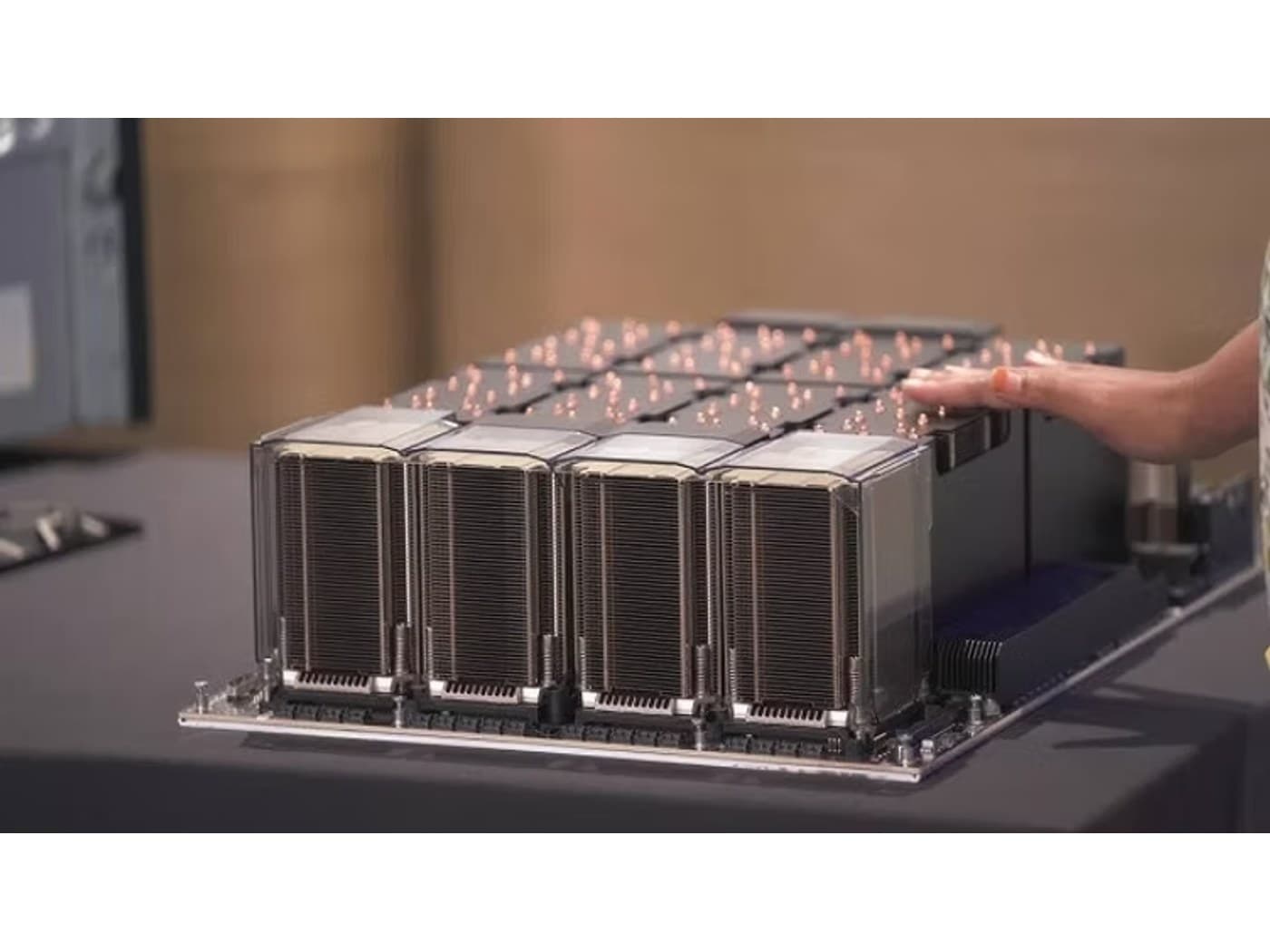
AMD MI300X and MI325X: The Enterprise Case for AMD in AI Infrastructure
AMD's MI300X and MI325X accelerators offer an increasingly compelling enterprise case for AI infrastructure, particularly for memory-intensive LLM inference workloads where 192GB of HBM3 provides a decisive architectural advantage over alternatives.
The enterprise AI accelerator market is no longer a one-vendor story. AMD's MI300X and MI325X have emerged as credible alternatives to NVIDIA's H100 and H200 for specific workload classes, most notably large language model inference, where AMD's exceptional HBM memory capacity creates a structural advantage that benchmark sheets alone do not fully capture. For enterprise infrastructure teams building or scaling AI serving capacity, understanding where AMD excels and where it lags is now a required part of the procurement conversation.
The memory capacity advantage is real and consequential
The MI300X ships with 192GB of HBM3 (2.4x the 80GB available on the H100 SXM5). The MI325X pushes to 256GB with HBM3e. This is not a marginal difference. For LLM inference, GPU memory capacity directly determines which models fit on a single GPU or a small cluster, and how much of the KV cache can remain resident in fast GPU memory. A 70B parameter model in FP16 requires approximately 140GB; on an H100, it must be split across two GPUs. On a single MI300X, it fits, which simplifies serving architecture, reduces inter-GPU communication overhead, and improves per-query economics. For the largest frontier models (405B+), the gap is even more significant.
Software ecosystem maturity: the honest picture
The AMD software story has improved substantially over the past two years, but gaps remain relative to NVIDIA's CUDA ecosystem. ROCm (AMD's GPU computing platform) now supports PyTorch, TensorFlow, and JAX with reasonable parity for inference workloads. Major inference serving frameworks including vLLM, TGI, and Ollama have added MI300X support. The gaps are most pronounced in training workloads, where CUDA-optimized kernels, cuDNN, and the broader NCCL ecosystem give NVIDIA a meaningful productivity advantage. Enterprises primarily targeting inference workloads will encounter fewer software ecosystem obstacles than those planning full training pipelines.
- MI300X: 192GB HBM3, 5.3 TB/s memory bandwidth, best-in-class for large model inference
- MI325X: 256GB HBM3e, 6.0 TB/s memory bandwidth, designed for frontier model serving
- ROCm software stack supports major inference frameworks with active upstream development
- Training support is improving but CUDA-optimized codebases require porting effort to achieve peak efficiency
- Pricing is generally 20–35% below equivalent NVIDIA configurations, improving TCO for inference-heavy deployments
- AMD's open ecosystem stance creates meaningful long-term competitive leverage for enterprises
When AMD is the right choice, and when it is not
AMD infrastructure makes strong economic and technical sense for enterprises building dedicated inference clusters serving large models, organizations that want to diversify their accelerator supply chain to reduce single-vendor dependency, and teams with internal software capabilities to manage ROCm optimization. It is a harder choice for teams running existing CUDA-optimized training codebases where porting cost is substantial, organizations without internal GPU software expertise that need drop-in CUDA compatibility, and workloads that depend on NVIDIA-specific libraries (TensorRT, NCCL, cuDNN) that lack mature AMD equivalents.
AMD's memory capacity advantage in the MI300X is not a spec sheet win. It changes the serving architecture. Fewer GPUs per model, simpler parallelism, lower inter-node communication overhead. That is real operational simplicity, not just benchmark performance.
How Nexus Compute helps
Nexus Compute supplies AMD MI300X and MI325X servers alongside NVIDIA configurations, allowing enterprise customers to make workload-appropriate hardware choices without being locked into a single vendor. Our technical team can help model the tradeoffs between AMD and NVIDIA configurations for your specific inference or training workload, and we support multi-vendor fleet deployments for organizations building heterogeneous GPU infrastructure.
Systems covered in this article
Planning a hardware investment?
Tell us what you're trying to build. A procurement specialist will help you specify and quote the right configuration within 48 business hours, no obligation.