
NVIDIA Blackwell GB200 NVL72: What Enterprises Need to Know
The NVIDIA Blackwell GB200 NVL72 redefines AI compute density, delivering 72 GPUs in a single rack-scale unit. Before committing to this architecture, enterprise infrastructure teams need to understand the power, cooling, and networking requirements that make or break deployment success.
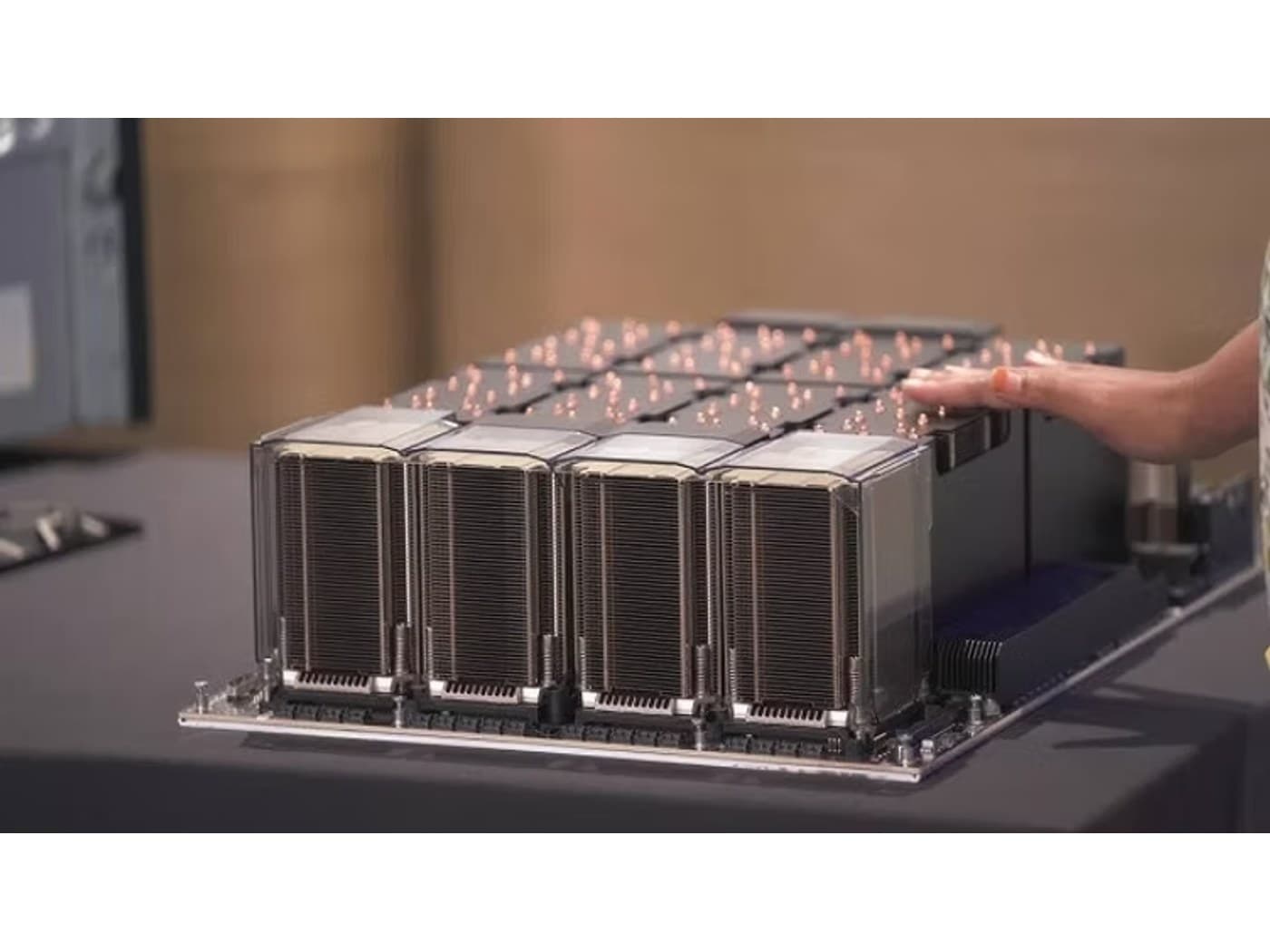
The NVIDIA Blackwell GB200 NVL72 is not a server refresh. It is a fundamental rethinking of how compute, memory, and interconnect are packaged at rack scale. With 72 Blackwell GPUs and 36 Grace CPUs unified under a 1.8 TB/s NVLink fabric, a single NVL72 rack delivers performance that previously required an entire data center wing. For enterprise infrastructure teams, that shift creates opportunity, but also a set of engineering challenges that demand serious pre-deployment planning.
Architecture fundamentals: what makes the NVL72 different
The NVL72 treats 72 GPUs as a single logical unit. There are no PCIe bottlenecks between CPU and GPU: Grace and Blackwell are connected via NVLink-C2C at 900 GB/s per chip. The result is a coherent memory pool of 13.5 TB of HBM3e accessible across the entire rack. For large language model training and inference, this means models that previously required complex model-parallelism hacks can run with simpler, more efficient configurations. The architectural implication is profound: software teams that have spent years managing inter-node communication overhead will find those constraints dramatically relaxed.
Power and cooling: the non-negotiable requirements
- Each NVL72 rack draws up to 120 kW, so facility infrastructure must be validated before procurement begins
- Direct liquid cooling is mandatory, not optional; air cooling cannot support this thermal density
- Facilities need rear-door or direct-to-chip liquid loops capable of 45°C+ coolant inlet temperatures
- Power delivery infrastructure must support high-density PDUs with redundant feeds at the rack level
- Data center floor loading must be assessed, because the NVL72 is significantly heavier than conventional rack configurations
Networking: InfiniBand NDR vs Ethernet 800G
Within the rack, NVLink handles everything. Between racks, enterprises face a real architectural decision. NVIDIA's reference design calls for InfiniBand NDR400 or NDR800 for scale-out GPU clusters, offering the lowest latency for distributed training. However, enterprises with existing Ethernet investments are increasingly deploying 400G or 800G Ethernet fabrics using RoCE v2. The right choice depends on workload mix: pure distributed training at scale favors InfiniBand; mixed inference and training environments may justify Ethernet for its operational familiarity and broader vendor ecosystem.
The GB200 NVL72 is not a product you buy. It is a platform you design around. The enterprises that succeed with it are those that treat it as a facility project from day one, not a hardware purchase.
Total cost of ownership: building the honest model
List price for an NVL72 system runs into eight figures. But hardware acquisition is typically less than half of five-year TCO when facilities upgrades, power costs at $0.08–0.15/kWh, cooling infrastructure, and specialized operations staffing are included. Enterprises should model at least three scenarios: on-premises ownership, co-location in a purpose-built AI data center, and a hybrid approach where NVL72 systems handle steady-state workloads while burst capacity moves to cloud. The economics vary significantly by geography, existing facility state, and workload utilization patterns.
How Nexus Compute helps
Nexus Compute sources and configures GB200 NVL72 systems with the full supporting infrastructure stack: InfiniBand and Ethernet networking, direct liquid cooling integration, and high-density power distribution. We will not quote a rack-scale system without first establishing that your power, cooling and floor-space constraints are resolved on paper before hardware ships. For enterprises building their first rack-scale AI cluster, we provide deployment and commissioning support through first-workload validation.
Systems covered in this article
Planning a hardware investment?
Tell us what you're trying to build. A procurement specialist will help you specify and quote the right configuration within 48 business hours, no obligation.