
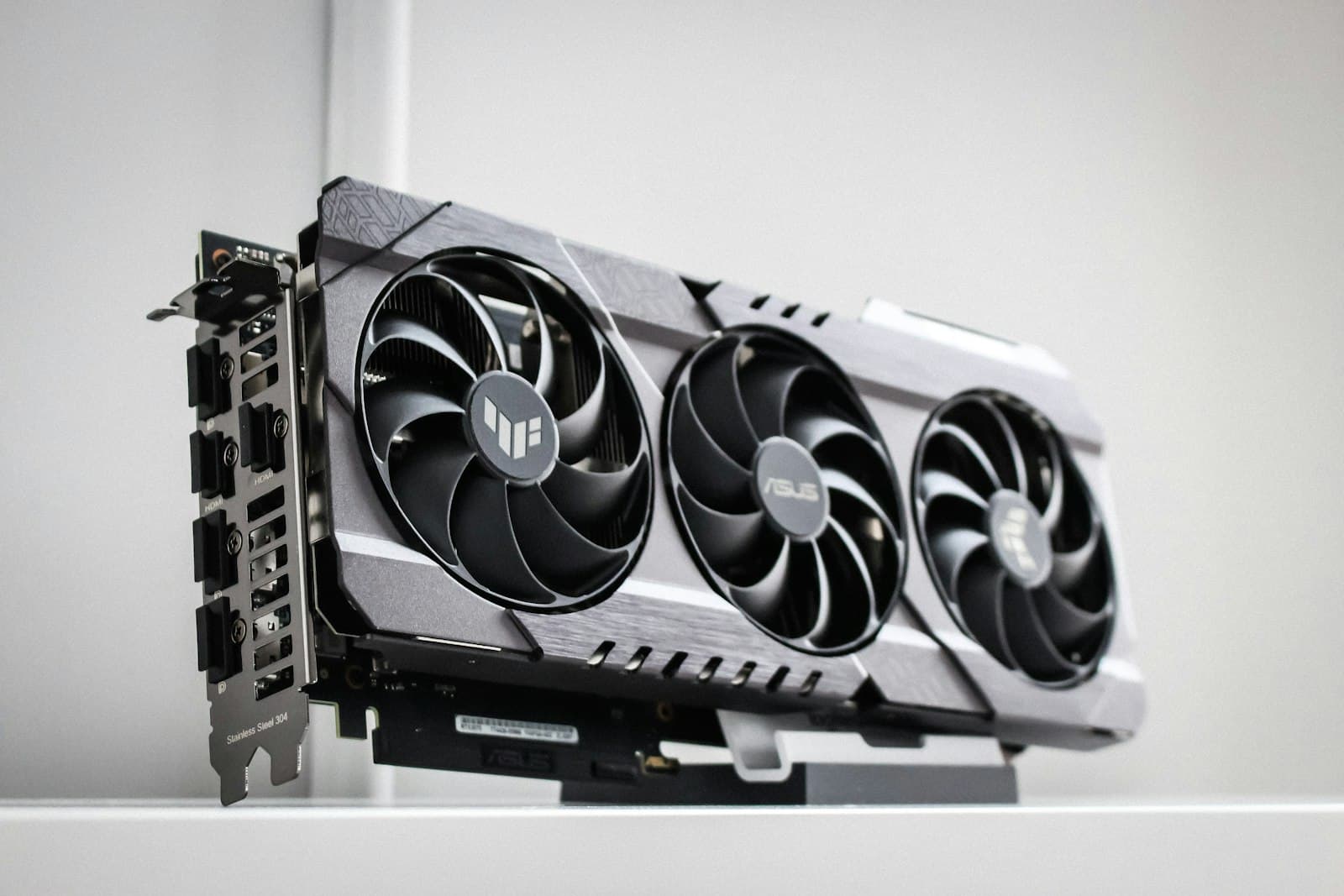
AMD MI300X 192GB and ROCm: Is the Software Ready for Enterprise?
The MI300X gives you 192GB of HBM3 per GPU, but the real question is ROCm. Here is an honest look at the software stack, what runs well today, and how to de-risk a deployment.
The AMD Instinct MI300X is the first AMD accelerator that competes with NVIDIA on raw capability rather than just price. With 192GB of HBM3 per GPU and roughly 5.3 TB/s of memory bandwidth, it holds models that would otherwise require sharding across several NVIDIA cards. But hardware was never AMD's problem. Software was. The decision to deploy MI300X is, in practice, a decision about whether ROCm fits your stack. This article addresses that directly.
The hardware case is genuinely strong
Each MI300X is a CDNA 3 accelerator on an OAM module with 192GB of HBM3, drawing up to 750W. A standard platform pairs eight of them on a universal baseboard connected by AMD Infinity Fabric. That gives you 1.5TB of GPU memory in a single node: enough to serve very large models, or several large models, without crossing a network boundary. For memory-bound inference, the bandwidth and capacity advantage over an 80GB card is decisive.
ROCm in 2026: what actually works
ROCm is AMD's open compute platform and the CUDA equivalent for Instinct hardware. It has matured substantially. The mainstream inference and training paths that most enterprises rely on are supported and increasingly turnkey.
- PyTorch runs on ROCm with upstream support, and most models that use standard operators run without code changes.
- High-throughput LLM serving frameworks such as vLLM have first-class ROCm backends, which covers the most common production inference pattern.
- Hugging Face Transformers, Flash Attention, and common fine-tuning libraries have working ROCm support.
- AMD ships tuned container images, so you can stand up a known-good environment instead of compiling the stack yourself.
Where you will still feel friction
The honest caveats matter. Custom CUDA kernels do not run on ROCm without porting, usually via HIP, which is mechanical but not free. Bleeding-edge research code that hard-codes CUDA assumptions, or depends on a niche CUDA-only library, will need work. Some third-party tools and profilers are still CUDA-first. The closer your workload is to mainstream PyTorch and standard serving frameworks, the smaller these problems become; the more exotic your stack, the more validation you should budget for.
When the MI300X is the right call
- You serve or fine-tune very large models where 192GB per GPU collapses an eight-card NVIDIA deployment into far fewer GPUs.
- Your inference stack is built on PyTorch plus vLLM or similar, which run well on ROCm today.
- Memory capacity and bandwidth per GPU are your binding constraint, not ecosystem breadth.
- You want a credible second source to reduce dependence on a single vendor's allocation.
Treat an MI300X purchase as a software decision wearing a hardware costume. Validate your real workload on ROCm before you scale, and the 192GB advantage is yours to keep.
De-risk before you commit at scale
The single most important step is to benchmark your actual models (not a vendor demo) on ROCm before placing a large order. Confirm your serving framework, your operators, and your throughput targets on representative data. Nexus Compute configures and burns in MI300X platforms, validates your target inference or fine-tuning workload on the ROCm stack, and ships warranty-backed systems through authorized channels with a quote inside 48 business hours, so the 192GB advantage shows up in production, not just on the datasheet.
Systems covered in this article
Planning a hardware investment?
Tell us what you're trying to build. A procurement specialist will help you specify and quote the right configuration within 48 business hours, no obligation.