
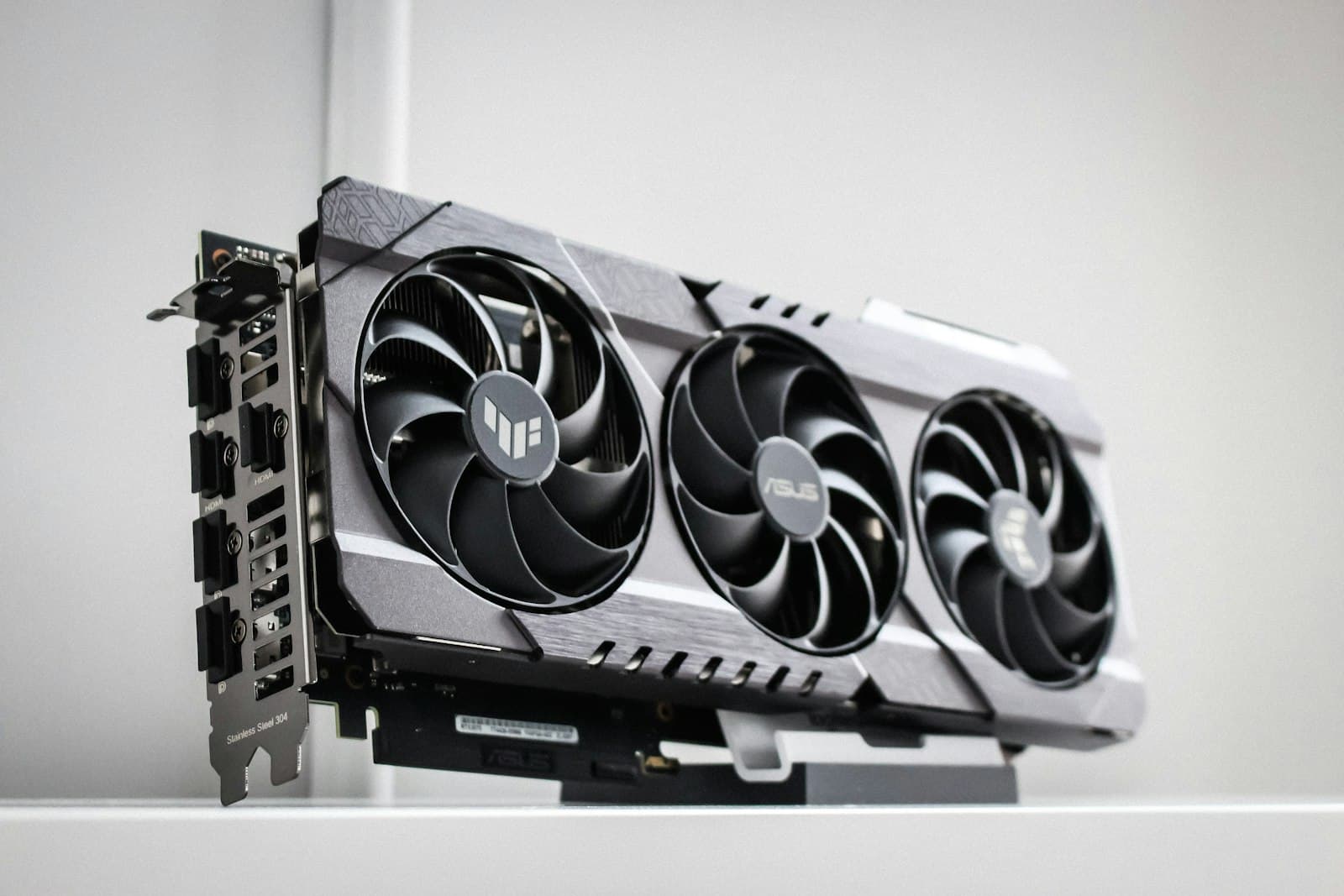
HGX B200 8-GPU Server: An Enterprise Buyer's Guide
The HGX B200 is the workhorse Blackwell node: eight GPUs, 1.5TB of HBM3e, fifth-gen NVLink. What to know before you buy and how to spec the full system.
If the GB200 NVL72 is the frontier instrument, the HGX B200 is the Blackwell platform most enterprises will actually deploy. It is the eight-GPU baseboard (the direct successor to HGX H100 and HGX H200) that drops into a standard server chassis and serves as the building block for clusters of any size. This guide covers what an HGX B200 node delivers and how to specify the system around it so the GPUs are never the bottleneck.
What's on the baseboard
An HGX B200 carries eight B200 SXM GPUs on a single baseboard, fully connected by fifth-generation NVLink through NVSwitch. Each B200 brings 192GB of HBM3e at roughly 8 TB/s, so the node totals 1.5TB of GPU memory in one tightly-coupled domain: eight accelerators that software can treat as a single large pool. Fifth-gen NVLink provides 1.8 TB/s per GPU of all-to-all bandwidth, a substantial step over the 900 GB/s of the Hopper generation.
How it differs from HGX H200
- 192GB per GPU and 1.5TB per node, versus 141GB and roughly 1.1TB on HGX H200.
- Roughly 8 TB/s of memory bandwidth per GPU versus about 4.8 TB/s on H200.
- Fifth-generation NVLink at 1.8 TB/s per GPU versus 900 GB/s on Hopper.
- Native FP4 and FP6 via the second-generation Transformer Engine, absent on H200.
- Higher TDP and, at density, a strong preference for direct liquid cooling.
The host platform matters
Eight Blackwell GPUs generate enormous demand on the rest of the server. Specify high-core-count CPUs to keep data pipelines fed, multiple terabytes of system memory, and NVMe storage sized so model loading and checkpointing never stall the GPUs. For multi-node training, plan one high-speed NIC per GPU (ConnectX-7 or BlueField-3 class) so the cluster network scales with the GPUs rather than throttling them. An underbuilt host quietly wastes the most expensive components in the box.
Scaling beyond one node
Inside the node, NVSwitch handles GPU-to-GPU traffic. Between nodes, the InfiniBand or Ethernet fabric becomes the bottleneck, so a non-blocking, rail-optimized topology matters as much as the servers themselves once you pass a single chassis. Get the network design right at cluster scale and the HGX B200 nodes deliver their full collective throughput; get it wrong and inter-node communication caps your effective performance.
Cooling and power planning
A fully populated HGX B200 node draws well into the multi-kilowatt range. Air-cooled configurations exist for facilities not yet ready for liquid, typically at reduced density, while high-density deployments lean toward direct-to-chip cooling. Decide your cooling approach before you decide your rack density, because they are the same decision, and the GPU performance you realize depends on getting it right.
Nexus Compute builds HGX B200 nodes as complete, validated systems: GPUs, host platform, networking, power, and cooling tested together and warranty-backed. It designs the cluster fabric when you scale past one node. Share your workload and facility specs and we will return a tested configuration and quote within 48 business hours.
Systems covered in this article
Planning a hardware investment?
Tell us what you're trying to build. A procurement specialist will help you specify and quote the right configuration within 48 business hours, no obligation.