
A100 80GB vs L40S for Inference: Which GPU Should You Buy?
Both are excellent inference cards with very different strengths: HBM bandwidth and MIG versus FP8 efficiency and density. Here is a clear, workload-driven way to choose.
When teams plan an inference deployment, two NVIDIA cards keep coming up: the A100 80GB and the L40S. They sit at a similar tier in many buyers' minds, but they are architecturally different tools that excel at different inference profiles. Choosing well can meaningfully change your throughput and your cost-per-request. This is a direct, workload-driven comparison for serving rather than training.
The two cards at a glance
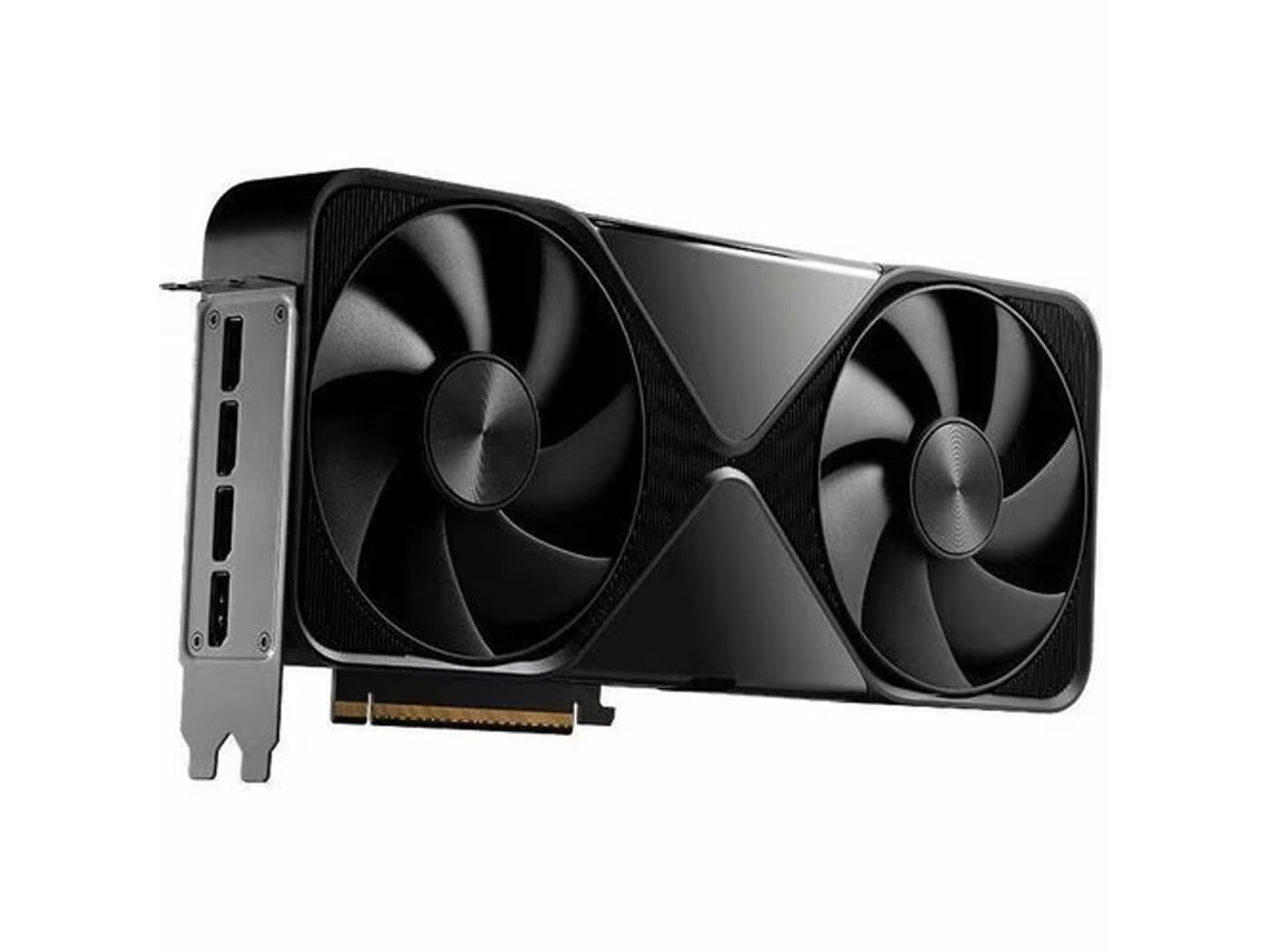
The A100 80GB is an Ampere GPU with 80GB of HBM2e at roughly 2.0 TB/s of bandwidth, NVLink on SXM boards, MIG partitioning, and a 300–400W envelope depending on form factor. The L40S is a newer Ada Lovelace GPU with 48GB of GDDR6 ECC at about 864 GB/s, no NVLink, FP8 Transformer Engine support, and a 350W PCIe design. More memory and bandwidth on one side; newer precision and efficiency on the other.
Memory and bandwidth: advantage A100
For inference, two things decide whether a card is a good fit: does the model fit, and is there enough bandwidth to serve it quickly. The A100's 80GB holds larger models, or more concurrent context, than the L40S's 48GB. And memory-bound decoding (the dominant cost in LLM serving) scales with memory bandwidth, where the A100's HBM2e materially outpaces the L40S's GDDR6. For the largest single-card models and the most bandwidth-hungry serving, the A100 leads.
FP8 efficiency and density: advantage L40S
The L40S supports FP8 via its Transformer Engine; the A100 does not. Serving in FP8 shrinks the memory footprint and improves throughput per watt, which partially offsets the L40S's smaller, slower memory and lets it stretch its 48GB further. The L40S also slots into standard PCIe servers at high density without liquid cooling, so an inference fleet of L40S cards can be cheaper to power and operate per stream than an equivalent A100 deployment.
Choose the A100 80GB when
- Your model needs more than 48GB on a single card, or you want large concurrent context windows.
- Your serving is bandwidth-bound and you need the throughput that HBM2e provides.
- You want MIG to partition one card into several isolated inference instances.
- You value the deepest, most mature software and kernel ecosystem available.
Choose the L40S when
- Your models fit in 48GB, especially when served in FP8.
- Power efficiency, density, and cost-per-request across a fleet are your priority.
- You are deploying into standard PCIe servers without exotic cooling.
- Your pipeline mixes LLM inference with image, video, or rendering work.
Pick the A100 80GB for capacity and bandwidth on big single-card models; pick the L40S for FP8 efficiency and density across a serving fleet.
Match the card to the node
Either card only performs when the surrounding server feeds it: adequate PCIe lanes, CPU, system memory, NVMe, and airflow rated for sustained load. Nexus Compute configures both A100 80GB and L40S inference systems, benchmarks them on representative serving workloads, and ships them warranty-backed through authorized channels with a quote returned within 48 business hours.
Systems covered in this article
Planning a hardware investment?
Tell us what you're trying to build. A procurement specialist will help you specify and quote the right configuration within 48 business hours, no obligation.