
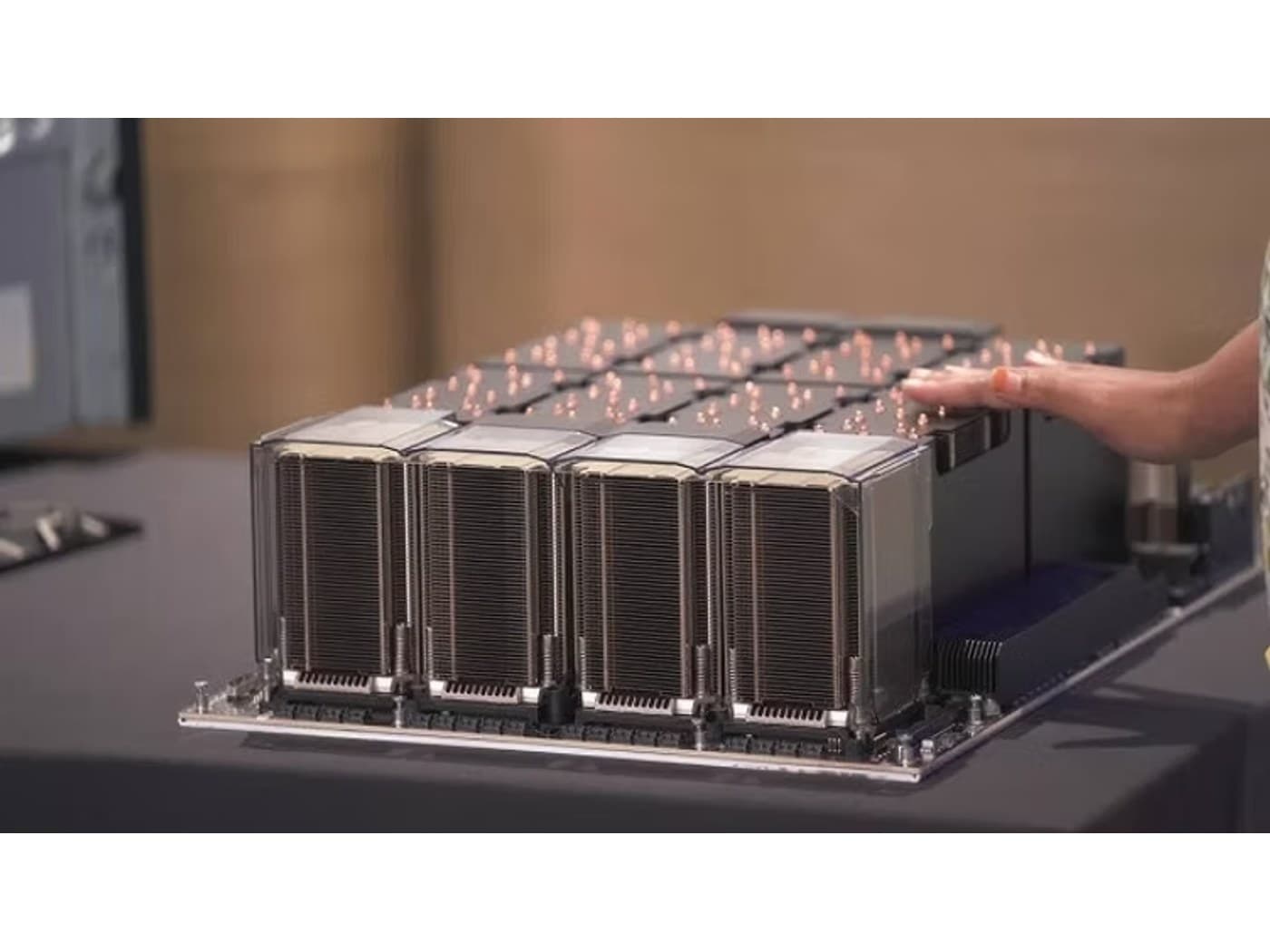
Is the NVIDIA A100 80GB Still Worth Buying in 2026?
The A100 80GB is no longer the flagship, but mature software, strong availability, and excellent price-performance keep it a smart buy for the right workloads. Here is when it still makes sense.
The NVIDIA A100 launched in 2020 and was the data-center workhorse that trained much of the first generation of large language models. Two GPU generations later, it is easy to assume it is obsolete. It is not. For a large class of enterprise workloads, the A100 80GB remains one of the most sensible accelerators you can deploy in 2026, precisely because it is no longer the newest part. This guide explains where it still wins and where you should reach for something newer.
What the A100 80GB actually delivers
The A100 80GB is an Ampere-architecture GPU with 80GB of HBM2e memory. The SXM4 variant delivers roughly 2.0 TB/s of memory bandwidth and draws up to 400W; the PCIe variant is around 1.9 TB/s at 300W. Tensor Core throughput is about 312 TFLOPS dense for FP16/BF16 and 156 TFLOPS for TF32, with NVLink providing 600 GB/s of GPU-to-GPU bandwidth on SXM boards. It supports Multi-Instance GPU (MIG), so a single card can be partitioned into up to seven isolated instances.
What it lacks, relative to Hopper and Blackwell, is an FP8 Transformer Engine. The A100 tops out at FP16/BF16 precision for training, which means lower peak throughput per watt than an H100 on transformer workloads. That single gap explains most of the cases where you should pick a newer part.
Where the A100 80GB still makes sense
- Inference and serving of models up to roughly 70B parameters quantized, where 80GB of memory and mature kernels matter more than peak FLOPS.
- Fine-tuning and LoRA adaptation of mid-size models, which rarely saturate an H100's FP8 path anyway.
- Mixed research clusters where broad framework support and battle-tested drivers reduce operational risk.
- Teams that need MIG to carve one card into several guaranteed-isolated slices for many small concurrent jobs.
- Budget-constrained buildouts where price-performance, not absolute performance, is the deciding metric.
Where you should choose newer silicon instead
If you are training large transformers from scratch, the H100's FP8 Transformer Engine and higher HBM3 bandwidth deliver a real, measurable speedup per dollar of energy. If your models exceed 80GB per GPU and you would otherwise shard across many cards, an H200 or an MI300X with far more memory will simplify your topology. And if you are standing up a brand-new multi-year platform, buying the newest generation extends the useful life of the investment.
The software story is the A100's quiet advantage
Because the A100 has been in production for years, the CUDA, cuDNN, TensorRT, and framework stack around it is exceptionally stable. There are fewer surprises, fewer kernel regressions, and a deep base of community knowledge. For an enterprise that values predictability over peak benchmarks, that maturity has genuine operational value that does not show up on a spec sheet.
The A100 80GB is rarely the fastest option on paper, but for inference, fine-tuning, and mixed research it is frequently the most cost-effective option that ships and just works.
Buy a validated system, not a loose card
An A100 is only as good as the chassis, power delivery, NVLink fabric, and cooling around it. A mismatched server can throttle a perfectly good GPU. Nexus Compute configures A100 80GB systems (PCIe nodes or HGX SXM platforms), burns them in under sustained load, and ships them warranty-backed through authorized channels, with a quote returned within 48 business hours.
Systems covered in this article
Planning a hardware investment?
Tell us what you're trying to build. A procurement specialist will help you specify and quote the right configuration within 48 business hours, no obligation.